
.svg)
The Quiet Work of Showing Up Well
.jpg)
It is almost always day three.
The team landed exhausted on day one, ran on adrenaline through orientation on day two, and by the third morning someone — often the most motivated, most invested person on the trip — wakes up unable to keep breakfast down. A fever by the afternoon. A translator helping them find a bathroom. The trip leader trying to figure out whether this is food, water, altitude, or simply the predictable consequence of a body that did not get enough sleep, enough water, or enough acknowledgment that it is now operating in an entirely new climate.
This pattern is not random. It tracks a specific kind of person — the one who wanted to be here most, who skipped breakfast because the work mattered more, who kept going on four hours of sleep because it felt wrong to rest while there was still something to do. The same pattern shows up in a second place that is harder to see: the volunteer who talks more than they listen, who tries to help before they understand, who assumes that the way things are done at home is the way things ought to be done here.
The best mission volunteers are not the ones who push hardest in either direction. They are the ones who do the quiet work. The work of taking care of the body that is doing the serving. The work of checking assumptions at the border and leaving them there. The work of letting the trip change them as much as it changes anyone else.
This article is about that quiet work.
What Your Body Is Actually Doing in the First 72 Hours
A mission trip compresses an enormous amount of biological change into a very short window. In roughly three days, your body is trying to adjust to a new time zone, a new microbial environment, a new climate (often significantly hotter and more humid than home), new food, new water, and new physical demands — sometimes at altitude, sometimes in environments with limited ventilation, almost always on less sleep than you are used to.
Any one of these adjustments is manageable. Stacked on top of each other, they produce a real physiological load. Cortisol is elevated. Sleep architecture is fragmented. The gut microbiome is being renegotiated in real time by unfamiliar bacteria. The cardiovascular system is working harder to cool the body. The immune system is triaging, and anything it deprioritizes is running under-resourced.
This is the context into which most volunteers introduce a second load: overcommitment. The assumption that rest is selfish. The assumption that skipping lunch to keep working is noble. That is the most common failure pattern on mission trips, and it is avoidable. The body is not morally indifferent — it is doing the actual work of keeping you functional, and it does not distinguish between exhaustion caused by selfishness and exhaustion caused by service. It just gives out.
Water Is Not a Metaphor
The single most common preventable problem on a mission trip is dehydration. Volunteers in tropical climates routinely lose two to three liters of fluid per day through sweat alone, well before accounting for physical labor. A body that is 2% dehydrated is already experiencing measurable cognitive impairment — slower reaction times, worse decision-making, impaired mood. By 4%, headaches and nausea are common. By 6%, you are in territory that looks like illness.
Most volunteers who “got sick” on day three were actually dehydrated on days one and two.
The practical rule is unglamorous. Drink water continuously through the day, not only at meals. Add oral rehydration salts if you are sweating significantly or experiencing any GI symptoms — not sugary sports drinks, which can worsen the problem. Use a filtered bottle you trust (Grayl and LifeStraw both perform well) when local water safety is uncertain. Pay attention to urine: pale and frequent is the target. Dark or infrequent means you are already behind.
Alcohol does not count as fluid. One beer on a hot day after long service work will set your hydration status back meaningfully.
Sleep Is a Serving Tool
Immune function declines measurably after even one night of poor sleep. By night three, if you are running on fragments, your body’s ability to fight off the new pathogens it is encountering is genuinely compromised. This is why people get sick in the middle of the trip, not at the start — the incubation period matches the window in which accumulated sleep debt catches up with immune capacity.
The intervention that makes the biggest difference is protecting a seven-hour window in the schedule every night, even if the conversation is good, even if the sunrise is beautiful. Earplugs and an eye mask do more for your effectiveness on the trip than almost any other piece of gear. For trouble sleeping in unfamiliar environments, a single dose of melatonin (0.5 to 3 mg) an hour before bedtime is well-tolerated, non-habit-forming, and particularly useful across time zones.
The Food Is the Relationship
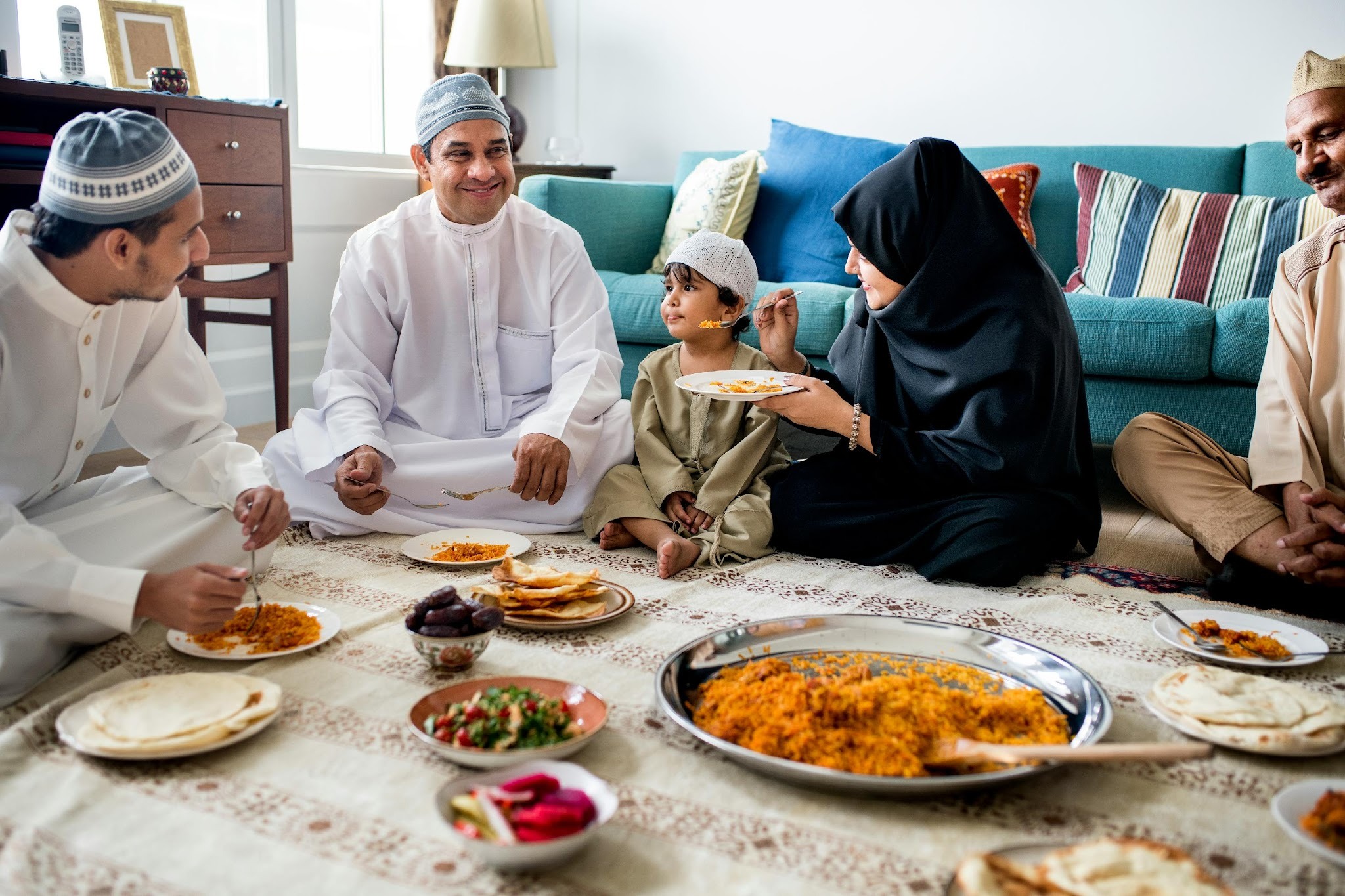
Sharing meals with the community you are serving is, in most cultural contexts, not optional. It is part of the relationship. Refusing hospitality because of food safety concerns sends a message you almost certainly do not mean to send.
The goal is to eat what is offered, graciously, while making intelligent decisions about risk. Cooked and hot is almost always safer than raw or room-temperature. Fruit you peel yourself is safer than fruit someone else peeled. Bottled or purified water is safer than tap, including ice and the water you use to brush your teeth. Home-cooked meals from host families are generally excellent — the risk factors are transit, storage, and cross-contamination, all of which are minimized when food is prepared fresh and served immediately.
Carry a basic GI kit: loperamide for symptom control, oral rehydration salts, and a short course of azithromycin if your travel medicine physician has prescribed it for self-treatment. Most travelers’ diarrhea resolves in 24 to 48 hours. Fever above 101°F, bloody stools, abdominal pain or symptoms persisting more than three days are reasons to see a physician.
The cultural dimension of food runs deeper than safety, though. The family that fed you their best dish is showing you something about who they are. The shared meal is a point of translation that words often fail to reach. This is where many of the strongest memories from mission trips come from, and it is worth being present for.
You Are a Guest Before You Are a Helper
There is a body of research in medical and public health education, originating in a 1998 paper by physicians Melanie Tervalon and Jann Murray-García, that draws a useful distinction between cultural competence and cultural humility. The older model assumed that with enough study you could master another culture’s rules and then operate smoothly within them. The newer framing rejects that. It proposes that engaging across cultures is a lifelong posture — one of self-reflection, honest acknowledgment of your own limits, and genuine partnership with the people you are working alongside. You are not going to master Honduras, or rural Uganda, or a Cambodian village, in a week. What you can do is show up with the right posture.
The posture is essentially this: you are a guest first. Helper is a role the host community may or may not invite you into. Visitor is the role you always occupy. Guests ask more questions than they answer. Guests notice what the hosts value and treat those things carefully. Guests pay attention to the rhythm of the household and adjust to it rather than expecting it to adjust to them.
This sounds abstract until you are in someone’s home and the grandmother is offering you a second helping of something you did not particularly want and your host family is watching to see how you respond. The guest who accepts graciously and eats slowly is doing more for the relationship than the one who delivered a perfect sermon that afternoon.
Different Is Not Wrong
Decades of cross-cultural research — most prominently the work of Dutch researcher Geert Hofstede and, earlier, the anthropologist Edward T. Hall — describe some of the ways cultures genuinely organize themselves differently. Some emphasize the individual; others emphasize the group. Some communicate directly and explicitly; others communicate through context, relationship, and what is left unsaid. Some structure themselves around clear hierarchies where age and position command deference; others flatten those lines substantially. Some plan in long time horizons; others operate in shorter ones.
None of these orientations is superior to another. They are different tools, shaped by different histories. A volunteer who treats their own cultural defaults as the neutral baseline is going to misread most of what happens in front of them.
A few practical translations. In many parts of Asia, Latin America, the Middle East, and Africa, yes can mean I hear you rather than I agree, and a flat no may feel rude where a gentle indirect signal is preferred. In cultures that prioritize group harmony, decisions are often made slowly and in rooms you are not in. In settings with a steeper sense of hierarchy, publicly questioning an elder or leader may create a discomfort you are not aware you caused, and pressing for a direct answer can make things harder, not easier. These are not failures of communication. They are different communication, working fine on their own terms — the visitor’s job is to calibrate to them, not the other way around.
The short version: if something surprises you, pause before you interpret it. The surprise is information about you, not about them.
The Conversation Runs Both Ways
One of the most consistent findings in the research on international volunteering is that the impact moves in both directions. Volunteers often come home transformed in ways they did not expect — more grounded, more attentive to what actually matters, less convinced that the way life is organized at home is the only way it could be. Host communities, for their part, do not experience these interactions passively either. They receive, interpret, and sometimes reshape the encounter on their own terms.
This matters because it reframes what the trip is. If the only direction of flow you can imagine is you giving and them receiving, you have already misread the situation. The grandmother cooking for you is helping you. The child teaching you how to say their name correctly is helping you. The nurse in a rural clinic working with fewer resources than you have ever had to work with, and doing it every day, is teaching you something about medicine that your residency did not.
The best mission volunteers come home able to name specific things they learned from specific people. Not abstract lessons about gratitude, but transferred knowledge: a way of preparing a meal, a way of caring for a sick child, a way of holding grief in community, a way of spending an afternoon that does not require a screen. These are real. They are worth receiving with the same seriousness you brought to offering whatever you came to offer.
The Emotional Load Has a Physical Cost
Mission work surfaces things. You may encounter poverty, illness, injury, or grief at a scale your nervous system has no prior reference for. Your body processes that. It shows up as trouble sleeping, appetite changes, unexpected emotion, and sometimes a kind of low-grade physical depletion that does not track to any specific cause.
This is not a problem to solve. It is a signal to honor. The volunteers who fare best emotionally are not the stoic ones — they are the ones who build small, consistent rituals for processing what they are seeing. A ten-minute journal entry before bed. A daily conversation with a teammate. A walk alone in the morning. Permission to feel the weight of it and keep going.
Ignoring the emotional load does not make it disappear. It relocates it — into the next week, into sleep, into the body. Teams that build a simple end-of-day debrief into the schedule consistently finish stronger and reenter their home lives more smoothly.
Coming Home Is Its Own Event
The trip does not end when the plane lands. The first week home is when a surprising number of post-mission illnesses actually present — a fever that starts five days after return, persistent GI symptoms, a respiratory illness that will not clear, fatigue that does not lift. Some of this is ordinary reentry. Some of it is worth taking to a physician.
A few rules of thumb. Any fever within three weeks of returning from a malaria-endemic region warrants same-day medical evaluation, regardless of how mild it seems. Any GI illness still present two weeks after return is worth a stool sample and a conversation with your physician. Any skin lesion that is not healing, or any insect bite that develops unusual features, is worth showing to someone who knows what to look for. Tell your primary care physician where you went. I just got back from rural Honduras changes the differential diagnosis in meaningful ways.
The other kind of reentry is slower. Reverse culture shock is real. The abundance at home, the pace, the specific concerns of daily life can all feel slightly off for a few weeks. This usually resolves, but it helps to protect some quiet time and some conversations with people who have been where you have been. Writing down what you learned while it is still fresh — in concrete specifics rather than general lessons — is one of the best things you can do for the long-term impact of the experience.
The Quiet Work
None of this is meant to make mission travel sound dangerous, or complicated, or fragile. It isn’t. With reasonable preparation, basic hygiene, and a willingness to honor your own body’s limits and the culture you are visiting, serious problems are uncommon and the experience is often one of the most formative things a person will ever do.
The volunteers who do best are not the heroic ones. They are the ones who sleep seven hours, drink water every time they think about it, eat what they are offered, rest when they need to, ask more questions than they answer, and understand that their effectiveness on this trip depends on taking care of the body that is doing the work and checking the assumptions that came along with it.
That care — of self, of others, of the space between — is not a side project. It is the work.
.jpg)
.jpg)