
.svg)
Traveling With Kids, Part 2: When They Get Sick Anyway (And They Will)
.jpg)
You planned well. You did the pre-travel physician visit. You packed the kit. You chose the restaurant carefully and watched the ice. And somewhere around day three — possibly on the morning of the thing you were most looking forward to — your child wakes up with a fever, is inconsolably miserable, or produces something from their body that removes all ambiguity about how the day is going to go.
This happens to traveling families with enough regularity that it should be part of the plan, not a deviation from it. Children get sick at home at a rate that would alarm anyone who stopped to count. Putting them in a new food environment, a new sleep schedule, different water, different sun, and a long-haul flight beforehand doesn’t reduce that frequency. The families who handle it well aren’t the ones whose children didn’t get sick. They’re the ones who knew what to do when it happened.
Before You Need It: The Pediatric Travel Kit
The time to build a travel medical kit for children is not in a foreign pharmacy at nine in the evening, trying to explain through gestures that you need something for a fever. It is at home, before departure, with enough time to have a brief conversation with your pediatrician about what belongs in it.
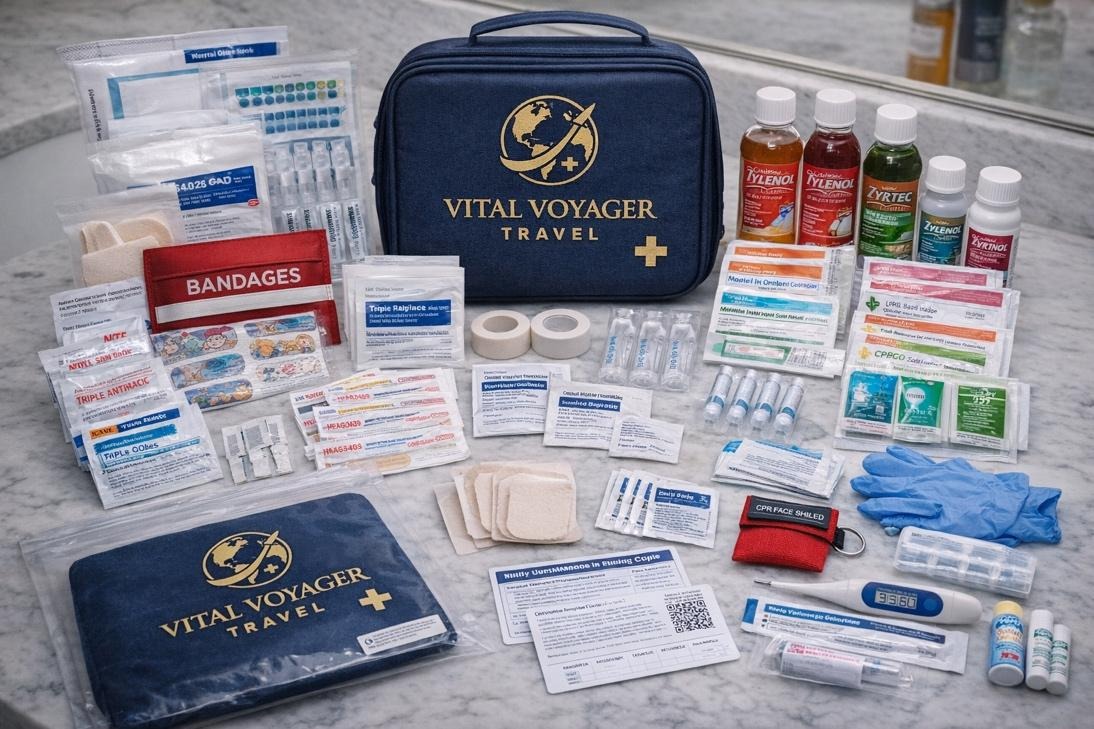
What that kit generally includes, in the broad categories a physician would recognize: a reliable thermometer (rectal for infants, temporal or ear for older children — and know which one your child’s physician prefers for accuracy); age-appropriate fever and pain management in the correct formulation for your child’s weight; oral rehydration salts, which are more effective than water or juice alone for the dehydration that accompanies vomiting and diarrhea and available at any pharmacy before you leave; an antihistamine for allergic reactions; a basic wound care kit including antiseptic, bandages, and medical tape; any prescription medications your child takes regularly, in quantities that exceed your trip length plus a buffer for delays.
The prescription conversation is the one worth having explicitly with your pediatrician before departure. Depending on your destination and your child’s age and history, a physician may recommend adding a standby antibiotic for traveler’s diarrhea, or specific medications relevant to your itinerary. What’s appropriate varies significantly by child, destination, and trip type — which is why a five-minute conversation before you leave is worth considerably more than any general packing list, including this one.
Fever Management Across Time Zones
Fever in a child is the most common acute issue traveling families face, and it is also the one most reliably made more confusing by jet lag, disrupted sleep, and the specific parental anxiety of being far from your regular pediatrician.
A few things that help frame the clinical picture: fever is a symptom, not a diagnosis, and in children it is most commonly the body’s normal response to a viral infection — which will usually resolve on its own without antibiotics and without an emergency room visit. The numbers that warrant genuine urgency are different by age: in an infant under three months, any fever is a reason to seek medical attention promptly. In older children, the behavior and overall appearance matters as much as the temperature — a child who is febrile but alert, drinking fluids, and consolable is a different clinical picture than one who is limp, unresponsive to comfort, or showing signs of difficulty breathing.
The jet lag layer complicates temperature reading in a specific way: a child whose circadian rhythm is substantially disrupted may run slightly higher baseline temperatures and may be more difficult to read behaviorally simply because they are exhausted and disoriented. This doesn’t change the clinical thresholds, but it does mean that the first night or two after a significant time zone crossing is worth some interpretive patience before escalating to alarm. Parental “gut instinct” should never be ignored.
What fever management looks like in practice abroad: use what you brought, follow the weight-based dosing your physician advised, keep the child hydrated, and monitor. If the fever is persistent beyond 48 to 72 hours, is accompanied by a rash, difficulty breathing, stiff neck, or extreme lethargy, or if your clinical instinct as a parent is telling you something is wrong beyond a normal illness — find care. That instinct is worth trusting.
Finding Care When You Don’t Know Where to Look
The sequence for finding appropriate medical care for a child abroad, in order of where to start:
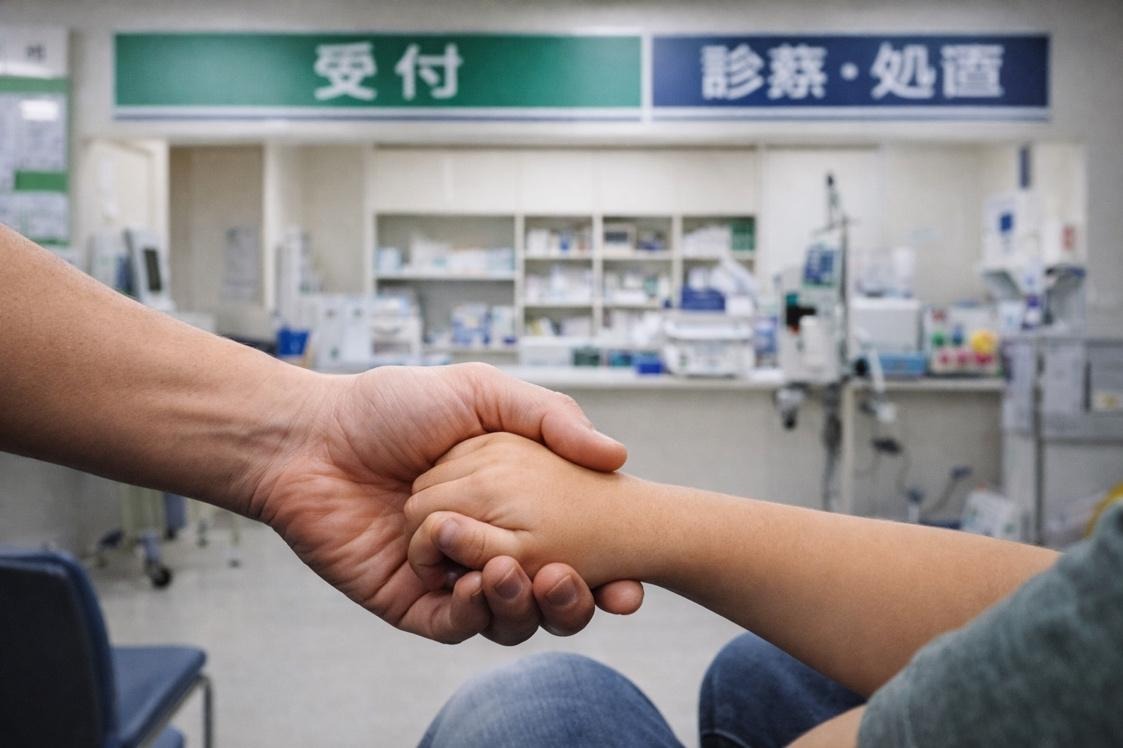
Your hotel is the first call, not the last resort. A concierge at a decent hotel — even a mid-range one — has typically dealt with ill guests before and knows exactly which clinic or hospital in the area is appropriate, which ones have English-speaking staff, and how to get there. This is a dramatically underused resource. The concierge at a hotel in Bangkok, Nairobi, or Lima has navigated this conversation dozens of times. You haven’t. Start there.
Your travel insurance company’s 24-hour assistance line is the second call. This is one of the most valuable features of comprehensive travel insurance and one of the least used, partly because people forget it exists until they need it. The assistance line can identify appropriate local facilities, facilitate communication with medical staff, authorize payment directly to the provider so you’re not paying out of pocket and seeking reimbursement later, and advise on whether the situation warrants medical evacuation. Have the policy number and the assistance number saved somewhere that isn’t only on your phone — a photograph of the insurance card in your email drafts is sufficient.
International hospital networks worth knowing by name for families traveling in Asia: Bumrungrad International and Bangkok Hospital in Thailand, Gleneagles hospitals across Singapore and Malaysia, and Apollo Hospitals across India are all private facilities with English-speaking staff and pediatric departments experienced with international patients. In Latin America, private hospitals affiliated with US networks in major cities are generally the most reliable option for English-speaking families. In Europe, the public healthcare system is generally excellent and accessible.
The Translation Problem — And the Tools That Actually Help
Walking into a foreign pharmacy or clinic with a sick child and no shared language is one of the more stressful experiences travel produces, and it is also one of the more solvable ones with the right preparation.
Google Translate’s camera mode is the single most practically useful tool in this situation. Hold your phone over a medication label, a prescription, a discharge instruction sheet, or a sign on a clinic door, and it renders a live translation in real time. It is imperfect and should not be used for complex clinical communication, but for reading a medication name, a dosing instruction, or understanding what a pharmacist is pointing at, it works reliably enough to be genuinely helpful.
Before departure, it’s worth downloading the offline language pack for your destination in Google Translate — this means the translation function works without data or WiFi, which matters in rural areas or when roaming isn’t available. The languages worth downloading before common family destinations: Spanish, Thai, Vietnamese, Indonesian, French, Italian, Portuguese, Japanese, and Mandarin cover the majority of popular international family travel corridors.
A hotel concierge will often offer to call a clinic on your behalf and explain the situation in the local language — accept this offer without hesitation. A written note from your child’s regular physician summarizing any known allergies, chronic conditions, or current medications, in both English and the language of your destination, takes about five minutes to prepare before departure and can save significant confusion in a clinical encounter.
Travel Insurance With Medical Evacuation: The Coverage Parents Don’t Think About Until They Need It
Standard travel insurance covers trip cancellation, lost luggage, and some medical expenses. It does not always cover medical evacuation — the process of transporting a patient from a location without adequate care to one that has it — which is an entirely different and substantially more expensive undertaking.
Medical evacuation for a child from a remote destination can cost anywhere from $50,000 to $200,000 or more depending on the location and what’s required. Most families do not have that sitting available. A travel insurance policy that explicitly includes medical evacuation coverage, or a standalone medical evacuation membership such as those offered by Global Rescue or MedJet, is worth the modest annual or per-trip cost in the specific context of international family travel — particularly for trips involving remote destinations, developing-country healthcare infrastructure, or extended itineraries far from major cities.
Read the policy before you buy it, specifically for the evacuation clause: some policies cover evacuation to the nearest adequate facility, others cover evacuation to your home country or hospital of choice. For families, the latter is meaningfully more valuable.

Food, Water, and the Kid-Realistic Version of the Rules
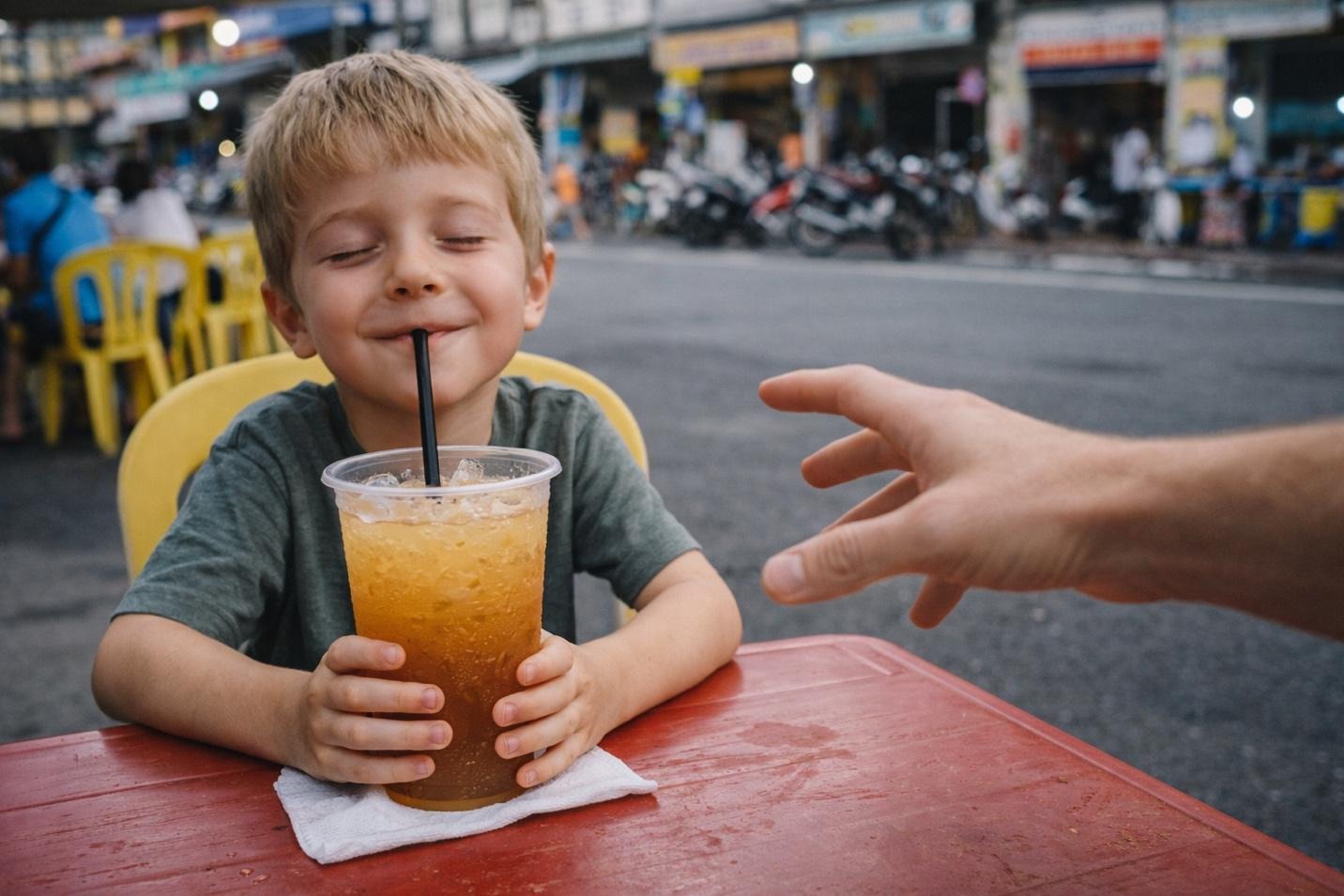
The clinical guidance on food and water safety abroad is correct and also, in practice, only partially followable when traveling with children. A five-year-old at a birthday party at a resort in Mexico who is handed a juice with ice is not going to refuse it on epidemiological grounds. Acknowledging this reality is more useful than pretending otherwise.
The hierarchy of actual risk: water from the tap in countries with unreliable municipal systems is the highest-risk item and the most avoidable — bottled water is accessible almost everywhere families travel. Ice in tourist-oriented hotels and restaurants in major cities is generally made from purified water and carries lower risk than its reputation suggests; ice from street stalls or rural settings is a different calculation. Raw produce washed in tap water carries genuine risk and is harder to identify or avoid. Food that is freshly cooked and served hot is the lowest-risk category across most destinations.
For children specifically, oral rehydration salts are worth considering as a first-line response to any significant diarrheal illness rather than a last resort — pediatric dehydration from gastroenteritis is the clinical concern, and ORS addresses it more effectively than water, juice, or sports drinks. Any diarrheal illness in a child that is accompanied by blood, abdominal pain, fever above 102°F, signs of dehydration, or that persists beyond 48 hours warrants medical evaluation rather than home management.
The Thing About Traveling With Sick Kids
Here is the honest version: a sick day abroad with a child, managed calmly and competently, is not the disaster it feels like in the moment. The illness resolves. The trip continues. The day you spent in the hotel room watching bad dubbed television and ordering room service soup becomes, in retrospect, one of the more memorable parts of the story — the one where everyone was together and nowhere to be and the city waited patiently outside.
Prepare the kit. Save the insurance number. Download the offline translate pack. Know which hotel staff member to call first. And then go somewhere worth all of this effort.
Part of the Traveling With Kids series. Part 1: The Vaccine Conversation Parents Keep Putting Off. Part 3: The Flight, the Hotel, and Keeping Everyone Alive Until Departure.
Related articles
.jpg)
.jpg)