
.svg)
Deck Chairs, Dramamine, and the Truth About Norovirus
.jpg)
There is a specific kind of denial that happens on the gangway. You've booked the cabin, packed the formal wear, located your sea legs in some optimistic corner of your imagination, and you are not going to think about the headlines. The ones about the norovirus. The ones with phrases like “hundreds of passengers” and “gastrointestinal illness” and “the ship returned early to port.” You step aboard, accept the glass of champagne, and decide that this will not be your cruise.
This is, statistically speaking, probably correct. But knowing why it’s probably correct — and what actually separates the passengers who spend day four horizontal in their cabin from the ones who are at the pool bar at noon — turns out to be more interesting and more actionable than the headlines suggest.
Norovirus: The Celebrity It Didn’t Ask For
Norovirus is the most famous illness in cruising and, in context, somewhat misrepresents itself. It is genuinely unpleasant — the combination of vomiting and diarrhea arrives fast, peaks hard, and typically resolves within 24 to 72 hours in healthy adults. What it is not is uniquely a cruise ship problem. Norovirus is the most common cause of acute gastroenteritis globally, responsible for an estimated 685 million cases per year worldwide. It circulates in schools, hospitals, restaurants, catered events, and offices with equal enthusiasm. Cruise ships get the headlines because they are a closed, reportable environment — the CDC’s Vessel Sanitation Program requires ships to report outbreaks when two percent or more of passengers or crew become ill, which means cruise ship outbreaks are tracked and publicized in a way that a norovirus outbreak at a hotel buffet simply isn’t.
The actual outbreak rate on cruise ships is low. CDC data consistently shows that the vast majority of cruises complete without a reportable gastrointestinal outbreak. When outbreaks do occur, the primary driver is almost never the ship itself — it’s passengers boarding already infected. Norovirus has an incubation period of 12 to 48 hours, which means the person who spent the previous night at an airport hotel with a dodgy room service burger is a more significant epidemiological event than anything happening in the ship’s kitchen.
What the ship environment does do is amplify transmission once a case is aboard. High density, shared surfaces, buffet service, and the social reality that people on vacation tend not to stay in their cabin when they feel “a little off” create efficient conditions for spread. This is why the hand sanitizer stations at every buffet entrance are not theatrical — norovirus transmits via the fecal-oral route, which is a clinical way of saying that hand hygiene is the single most effective intervention available to you. Wash your hands with soap and water before eating, every time, every meal. The sanitizer gel is a supplement, not a substitute — norovirus is notably resistant to alcohol-based sanitizers at the concentrations used in most dispensers.

Respiratory Illness: The Conversation That Moved On Board
If norovirus is the historic cruise health story, respiratory illness is the current one. Ships are, from an infectious disease standpoint, a reasonably efficient environment for respiratory pathogen transmission — recirculated air, close quarters in dining rooms and entertainment venues, and a passenger population that skews toward older adults with the occasional underlying condition. COVID-19 made this dramatically visible in early 2020, and the cruise industry has responded with substantially improved ventilation standards, HEPA filtration on most major lines, and outbreak protocols that are meaningfully more sophisticated than they were five years ago.
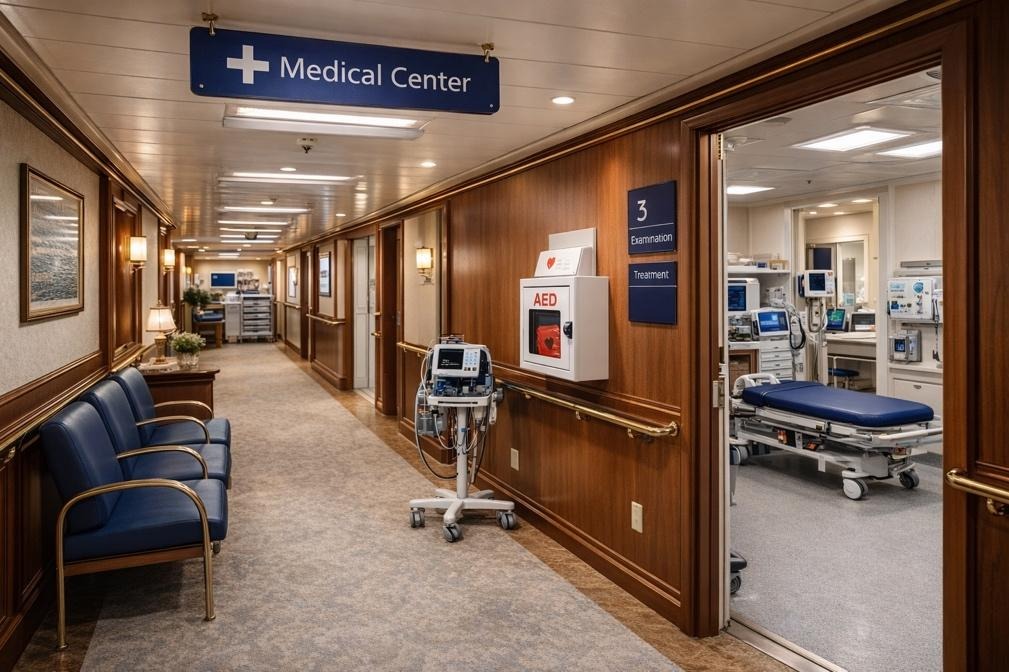
The practical reality for 2026: respiratory illness risk on a cruise ship is real, present, and manageable in the same way it is manageable anywhere you spend time in enclosed spaces with large numbers of people. The passengers most worth thinking carefully about this are those over 65, those who are immunocompromised, or anyone with significant cardiac or pulmonary history. For these travelers, being current on COVID and influenza vaccination before boarding is a clinical recommendation, not a bureaucratic one — the ship’s medical center is well equipped, but it is not a hospital, and evacuation from a ship at sea is a complicated and expensive undertaking that nobody wants to be the subject of.
For healthy travelers under 60 with no significant medical history, the respiratory illness calculus on a cruise ship is roughly equivalent to a long-haul flight followed by a week at a busy resort. Take reasonable precautions, wash your hands, don’t board if you’re already sick, and don’t catastrophize.

Sea Sickness: The One Nobody Thinks Will Happen to Them
Motion sickness on a ship is more democratic than people expect. It does not particularly care whether you’ve sailed before, whether you grew up near the ocean, or whether you’ve already booked twelve cruises without incident. It cares about sea state, ship size, cabin location, and individual vestibular system variability — none of which you fully control.
The mechanism is a sensory conflict: your inner ear detects motion that your eyes, fixed on an interior space, don’t confirm. The result ranges from mild queasiness to full incapacitation, and it tends to arrive in the first 24 to 48 hours before most people’s systems adapt. Larger ships in calm water produce almost no motion; smaller expedition vessels in open ocean passages — Drake Passage, the North Atlantic in winter — can produce conditions that would challenge a naval officer.
Practical management, in clinical order of effectiveness: choose a cabin midship and on a lower deck, where motion is minimized. Scopolamine patches (available by prescription) are the most consistently effective pharmacological option and should be applied four hours before boarding — not after you’re already green. Over-the-counter options include meclizine (Bonine) and dimenhydrinate (Dramamine), both antihistamines with genuine efficacy and the tradeoff of sedation. Ginger has modest but real evidence. Fresh air and a fixed horizon point work through the same sensory-conflict mechanism in reverse. The ship’s medical center stocks a full range of antiemetics and will not judge you — they have this conversation many times per sailing.
One thing worth knowing: alcohol and seasickness are a combination that many first-time cruisers discover the hard way on night one. A rough boarding day, a welcome cocktail, and a sea state that picks up after departure is a sequence that the ship’s medical staff recognize on sight.
Sun, Heat, and the Particular Trap of Sea Days
A sea day on a cruise ship is an invitation to spend eight hours in direct, reflected, equatorial sunlight while drinking something frozen and forgetting that you’re at the same latitude as Cancún. Sunburn is the most common medical complaint seen in cruise ship medical centers — not norovirus, not respiratory illness — and it is also the most preventable.
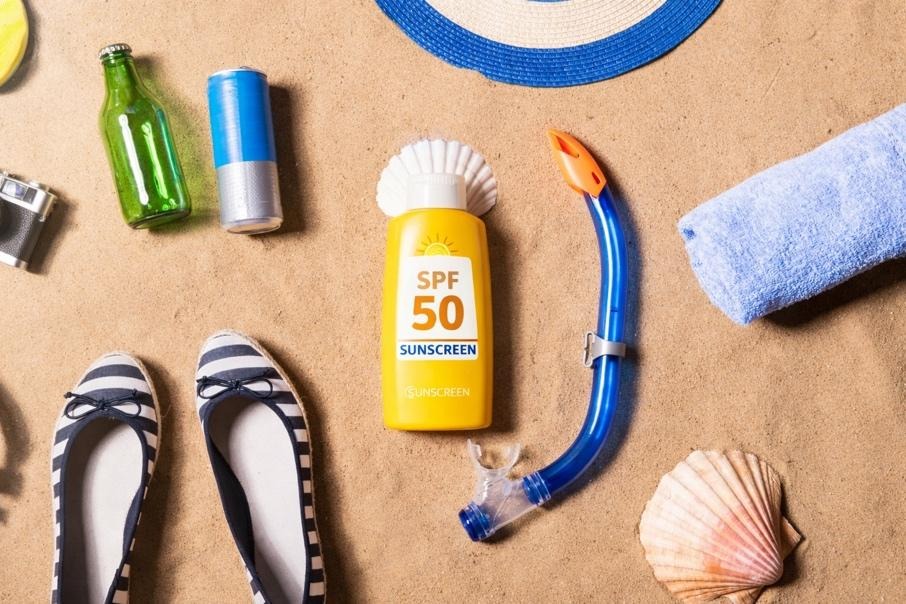
SPF numbers measure protection against UVB radiation, which causes burning. They say nothing about UVA, which causes the deeper damage and ages skin. A broad-spectrum sunscreen with SPF 30 or higher covers both, applied 20 minutes before sun exposure and reapplied every two hours or immediately after swimming. “Water resistant 80 minutes” on the label means the SPF value holds for 80 minutes of water exposure — not that you can skip reapplication after toweling off. Most people apply roughly 25 to 50 percent of the amount needed to achieve the labeled SPF. The practical implication: apply more than you think you need, and reapply more often than feels necessary.
Heat exhaustion deserves mention for Caribbean and Southeast Asian itineraries, particularly on port days involving walking tours in high humidity. The combination of heat, exertion, and the dehydrating effect of a sea days’ worth of cocktails creates the conditions for genuine heat illness in a meaningful number of cruise passengers each year. Drink water before and during port excursions, wear a hat, and recognize that feeling “a little dizzy” in 95-degree heat after a rum punch is a signal to find shade immediately, not to push on to the next site.
The One Preparation That Makes Everything Else Easier
Before any cruise — but especially one involving international ports, older travelers, or exotic itineraries — a conversation with a physician or travel medicine clinic is worth more than any amount of pre-boarding anxiety. Vaccine status (hepatitis A, typhoid, and yellow fever are relevant for specific itineraries), destination-specific health risks at ports of call, a scopolamine prescription if motion sickness is a concern, and a travel kit that includes an antidiarrheal, an antiemetic, and a broad-spectrum antibiotic for genuine gastroenteritis all come out of that conversation. The ship’s medical center is good. Not needing it is better.
Pack the Dramamine. Wash your hands at the buffet. Apply the sunscreen. And go enjoy the fact that someone else is driving.
Related articles
.jpg)
.jpg)
.jpg)