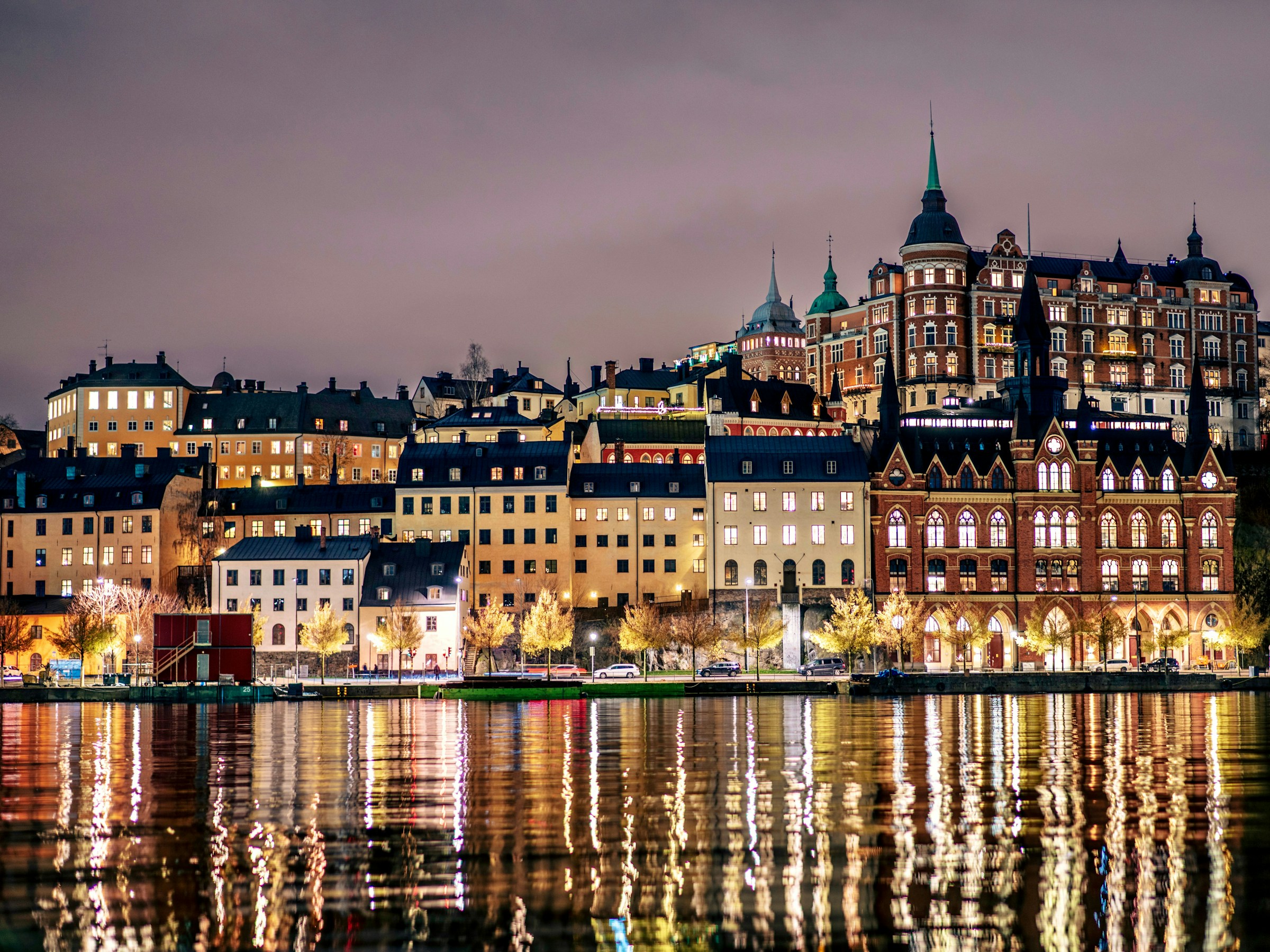
Sweden

Europe
Capital:
Stockholm
Currency:
Swedish Krona (SEK — Sweden is an EU member but has not adopted the Euro; Sweden joined NATO March 7 2024)
Risk:
Low-Moderate
📋

Health Overview

Sweden — Stockholm's waterborne archipelago; Gamla Stan's medieval alleyways; the Swedish wilderness; ABBA culture; the long summer light; and the darkest polar nights — is a magnificent destination that now carries a Level 2 terrorism advisory due to ongoing terrorist threat plotting. Sweden has also experienced documented gang violence in Stockholm; Gothenburg; and Malmö — though this violence is overwhelmingly between rival criminal organizations and not directed at tourists. The pre-travel health profile is clean: no malaria; no yellow fever; world-class healthcare; safe food and water. TBE is the main clinical discussion for outdoor summer travelers — the Stockholm archipelago and southern Sweden are endemic zones with documented TBE deaths in the medical literature. Sweden's NATO accession in March 2024 is a recent geopolitical milestone worth noting.

Key Health Risks

Low-Moderate
Terrorism — Level 2 Advisory
Sweden's Level 2 terrorism designation reflects ongoing threat assessment: terrorist groups continue to plan attacks; the 2026 Swedish National Counter-Terrorism assessment identifies violent Islamism and violent right-wing extremism as the primary threat sources. One terrorist attack motivated by violent Islamism was thwarted in Sweden in 2025 per the NCT (National Counter-Terrorism Centre). Sweden's open Schengen borders allow movement between European nations with limited identity controls. The specific attack targets named in the US advisory: tourist locations; transportation hubs (Stockholm Central Station; Arlanda Airport); markets/shopping malls; hotels; places of worship; parks; major sporting and cultural events; and airports. Practical guidance: situational awareness in crowded public spaces; know emergency exit routes in theatres; stadiums; and shopping centers; follow instructions from local authorities immediately if an incident occurs; contact US Embassy Stockholm at +(46)(8) 783-5300.
Low-Moderate
Tick-Borne Encephalitis
TBE is endemic in southern and central Sweden and is increasing in geographic range as climate warms. The Stockholm archipelago (Uppland; Sörmland; Västerås) is one of Sweden's most densely TBE-endemic areas — archipelago islands are popular summer destinations for hiking; cycling; and cabin stays. Gotland and Öland islands also have documented TBE foci. Swedish TBE surveillance data (CDC-published research; Emerging Infectious Diseases 2022): standardized mortality ratio of 3.96 for TBE in Sweden — meaning TBE patients are nearly 4 times more likely to die than age-matched controls; all TBE deaths in the 2004-2017 period occurred in patients ≥40 years of age. No fatal cases in patients under 40 — but severe neurological sequelae (long-term cognitive impairment; motor deficits) occur across all age groups. TBE transmission season: April through November; peak tick activity May-June and September. TICOVAC (FDA-approved 2021) is recommended for travelers with planned significant outdoor exposure in endemic areas. Be sure to consult your Dr. prior to travel to discuss.
Low
Gang-Related Violence
Gang violence — primarily involving rival criminal organizations competing for drug territory — has been a documented and serious issue in Malmö; Stockholm; and Gothenburg since approximately 2015. Incidents include shootings; explosions (grenades and IEDs); and knife crime. This violence is almost exclusively targeted between rival criminal gang members and has not deliberately targeted tourists or foreign visitors. The State Dept advisory specifically describes 'armed acts against each other' by organized crime groups. Practical risk to tourists: very low as long as travelers do not enter known gang territorial areas in non-tourist neighborhoods of Malmö (Rosengård district) and Stockholm outer suburbs. The Swedish police have responded with increased enforcement operations and the situation has somewhat improved in 2024-2025.
⛑️

Health Risk Callout

Sweden's Level 2 advisory is the correct framing for a country with genuine documented terrorist threat — but I contextualize it for patients: the gang violence in Malmö; Gothenburg; and Stockholm is almost entirely between criminal groups; it is not targeting tourists. The terrorism advisory is the standard 'be aware in crowded spaces' counseling appropriate throughout European travel in 2025-2026. The TBE data from Sweden is clinically notable — the standardized mortality ratio of 3.96 and the age distribution of deaths (all in patients ≥40) should inform my counseling: older travelers doing archipelago hiking or camping near Stockholm should receive a particularly direct TICOVAC recommendation.
🏥

Other Health Risks

Driving and winter road safety (Swedish roads are generally excellent; winter driving November-March requires winter tires which are mandatory by law December 1 through March 31 in most conditions; Swedish winter roads — particularly northern highways and mountain passes — require experience with ice and snow; elk/moose on roads are a serious nighttime driving hazard; elk-vehicle collisions cause significant injury and vehicle damage annually in Sweden); Internet scams (State Dept advisory specifically notes Sweden has documented internet romance and financial scams targeting US citizens — be skeptical of online contact from people claiming to be Swedish nationals needing financial assistance); Midnight sun (Swedish Arctic summer — Kiruna; Abisko; Jokkmokk — 24-hour daylight disrupts circadian rhythm; carry eye mask and ear plugs; light exposure management essential for multi-day northern Sweden itineraries)
🗺

Regional Information

Regional Risk Callout
Sweden's risk profile combines an essentially excellent health environment with a terrorism risk designation that deserves context. Stockholm's Gamla Stan; Djurgården; and the city's famous archipelago: primary tourist circuit; safe for travelers; main petty crime risk is pickpocketing in Gamla Stan and on the Arlanda Express. TBE endemic: Stockholm archipelago; Uppland; Sörmland; Blekinge; Skåne; Gotland; and Öland — outdoor travelers in these areas April-November need TBE discussion. Gang violence hot zones: Malmö's Rosengård; parts of Stockholm's suburb Rinkeby; Gothenburg's Biskopsgården — violence is overwhelmingly gang-on-gang; tourists are not targeted; but proximity awareness is prudent in these specific neighborhoods. Northern Sweden (Lapland; Abisko; Kiruna; Jokkmokk): no TBE risk; extreme cold preparation for winter; midnight sun awareness for summer; Swedish Lapland's wilderness is genuinely remote.
Regional Healthcare Callout
Healthcare throughout Sweden is excellent — among the world's best healthcare systems by virtually every metric. All Swedish hospitals provide excellent emergency care. Stockholm's Karolinska and the regional university hospitals in Gothenburg; Lund; Uppsala; and Umeå are world-class institutions. Remote Swedish Lapland (Kiruna; Abisko; Jokkmokk) has limited local acute care capability but helicopter rescue covers the region effectively. US travelers in Sweden: emergency care is available; travel insurance provides billing support for non-emergency care costs.
💉

Vaccine and Malaria Prevention

💉 Entry Vaccine Required
None — Sweden has no entry vaccine requirements for US travelers.
🛡️ Recommended Vaccines
Routine vaccines up to date (MMR; Tdap; influenza; COVID-19); Tick-borne encephalitis vaccine (TICOVAC — consider for travelers planning outdoor activities in forested and coastal areas of southern and central Sweden — Stockholm archipelago; Skåne; Blekinge; Gotland; Öland; Uppland; Sörmland — April through November; TBE deaths have been documented in Swedish surveillance data — Swedish TBE mortality risk is higher in patients over 60; age-stratified counseling is appropriate)
🦟 Malaria Information

No malaria risk.

Low-Moderate
👨

Physician Note

R
Dr. Robert
Emergency Medicine · 25+ Years · 40+ Countries

Sweden generates a conversation that is more interesting than the typical Northern European visit. The Level 2 terrorism advisory warrants brief but direct counseling: Sweden has an ongoing domestic terrorism threat; the gang violence is not directed at tourists but has involved grenades and IEDs in public areas; and the practical response is awareness in crowded public spaces and knowing exit routes. This is standard European terrorism counseling for 2025-2026; not a reason to avoid Sweden; but worth naming.

The TBE conversation has a clinically notable age-specific element: Swedish mortality data from a CDC-published study showed that all TBE deaths in the 2004-2017 surveillance period occurred in patients ≥40 years of age. For my older travelers going to the Stockholm archipelago for cabin stays and hiking; that data point sharpens the TICOVAC recommendation meaningfully. Sweden joined NATO in March 2024 — this is a geopolitical milestone worth noting; it does not change travel risk but is significant contextually.

Pre-Departure Checklist

8+ Weeks

  • CDC recommends Be sure to consult your Dr. prior to travel
  • Discuss TBE vaccine (TICOVAC) — discuss for Stockholm archipelago
  • Routine vaccine review (MMR
  • Tdap
  • Influenza
  • COVID-19)
  • Terrorism awareness briefing — terrorism indicator is the Level 2 reason
  • Review State Dept terrorism guidance for Sweden.

2–4 Weeks

  • Register with STEP
  • Travel insurance with winter rescue capability for Lapland itineraries
  • DEET 20%+ and permethrin for archipelago outdoor activities (TBE and Lyme prevention)
  • Daily tick check protocol
  • Winter preparation gear if traveling December-March (mandatory snow tires if driving
  • Thermal layers
  • Hypothermia awareness).

Day Of

  • US Embassy Stockholm +46-8-783-5300
  • Emergency 112 (all services — police
  • Ambulance
  • Fire)
  • Non-emergency police 114 14
  • Situational awareness in crowded public spaces (terrorism context)
  • Money belt for Gamla Stan and tourist areas
  • Mandatory snow tires if driving December 1 through March 31
  • Elk awareness while driving after dark.
✈️

Trip Type Guidance

Adventure

  • Swedish Lapland — Kebnekaise mountaineering (Sweden's highest peak at 2096m
  • Accessible with moderate fitness in summer
  • Proper alpine gear required
  • Swedish Mountain Guide Association licensed guides available
  • No TBE risk at altitude
  • Midnight sun allows extended climbing days in June-July). Icehotel in Jukkasjärvi (unique luxury winter experience
  • Accessible from Kiruna
  • Extreme cold preparation essential
  • No infectious disease risk
  • Northern lights viewing). Dog sledding (Kiruna
  • Jokkmokk
  • Abisko
  • February-March optimal
  • Cold injury preparation critical — face mask
  • Insulated layers
  • Thermal boots). Stockholm archipelago kayaking (14000 islands
  • TBE TICOVAC vaccine essential for island camping and coastal kayaking
  • Cold Baltic water — wetsuit recommended
  • Life jacket mandatory).

Family

  • Sweden is outstanding for family travel — ABBA Museum
  • Vasa Museum (17th century warship)
  • Skansen Open Air Museum
  • Stockholm's child-friendly café culture
  • Gothenburg's amusement park Liseberg
  • Swedish children's book culture (Pippi Longstocking
  • Elsa Beskow)
  • Junibacken (children's story museum in Stockholm).

Business

  • Stockholm is Scandinavia's largest financial center and startup ecosystem — home to Spotify
  • Klarna
  • King
  • Mojang (Minecraft)
  • Northvolt
  • Excellent English-speaking business environment
  • Direct transatlantic flight connections.
🗒️

Notes

Special Evacuation Notes
Medical evacuation from Sweden to the US is logistically straightforward — Stockholm Arlanda is a major international hub with direct transatlantic connections. Within Sweden; helicopter rescue operates in all regions. For remote Lapland emergencies; initial air evacuation to Umeå or Luleå hospital before potential onward transfer. No unusual evacuation complexity for any standard Swedish itinerary.
Safety Notes
Sweden is fundamentally a safe travel destination for tourists — the Level 2 advisory reflects the terrorism threat assessment and the documented gang violence; neither of which has resulted in frequent or targeted incidents against tourists. Practical safety guidance: (1) Terrorism: maintain situational awareness in crowded public spaces (Stockholm Central Station; Arlanda Airport; major shopping centers; Gamla Stan during holiday markets) — know exit routes; follow police instructions immediately during any incident; (2) Gang violence: avoid the specific documented gang territorial areas in Malmö (Rosengård); Stockholm (Rinkeby; Husby; Tensta); and Gothenburg (Biskopsgården) — these are outer-city neighborhoods not on the standard tourist circuit and easily avoided; (3) Petty crime: Gamla Stan is the primary pickpocket zone in Stockholm — money belt recommended; (4) Winter driving: mandatory winter tires December 1 through March 31; slow down on ice; elk awareness after dark; (5) Internet scams: do not respond to financial requests from online contacts claiming to need emergency funds from Sweden.
partner recommendation
Medical Evacuation & Assistance
A medical crisis far from home can cost $50,000+ to evacuate. Global Rescue — the partner we personally trust — provides worldwide evacuation and round-the-clock medical assistance.
Get a quote
Good For
Adventure
Family
Business
Quick Info
  • Capital
    Stockholm
  • Language
    Swedish (Svenska); Sami languages recognized as minority languages
  • Currency
    Swedish Krona (SEK — Sweden is an EU member but has not adopted the Euro; Sweden joined NATO March 7 2024)
  • State Dept Level
    2
  • Crime Risk
    Low-Moderate (gang violence is documented in specific city neighborhoods; terrorism threat is the reason for Level 2; tourist-directed crime is low)
  • Disaster Risk
    Moderate — Sweden has significant weather risk: western and northern regions experience severe Atlantic and Arctic storms; winter avalanche risk in Swedish Lapland mountain areas (Kebnekaise massif; Sarek National Park); spring snowmelt flooding; elk collisions on roads are documented year-round; summer: forest fires in dry conditions (southern and central Sweden); Baltic coast: occasional severe storms.
Water Safety
✅ Tap Water Safe
Tap water is safe throughout Sweden and is among Europe's finest — Swedish municipal water systems are excellent; many Swedes preferentially drink tap water and regard bottled water as environmentally wasteful. Swedish tap water from glacier-fed mountain lakes and treated surface water meets the highest EU and Swedish standards.
Top Hospital
Karolinska University Hospital (Karolinska universitetssjukhuset)
Stockholm (Solna and Huddinge campuses)
One of the world's most renowned academic medical centers — consistently ranked among Europe's top hospitals. Home to the institution that awards the Nobel Prize in Physiology or Medicine. Full specialty capability across all disciplines. Solna campus (main): emergency; neurosurgery; oncology; transplantation. English fluently spoken throughout. Also excellent: Sahlgrenska University Hospital (Gothenburg); Skåne University Hospital (Malmö/Lund). All Swedish hospitals operate at world-class standards.
Emergency Numbers
112
Emergency
112 (all services — police; ambulance; fire all reached via 112)
Ambulance
US EMbassy
+46-8-783-5300
https://se.usembassy.gov/
Resources
Primary Sources
Direct lines to the agencies that publish the world's most trusted travel-health guidance.