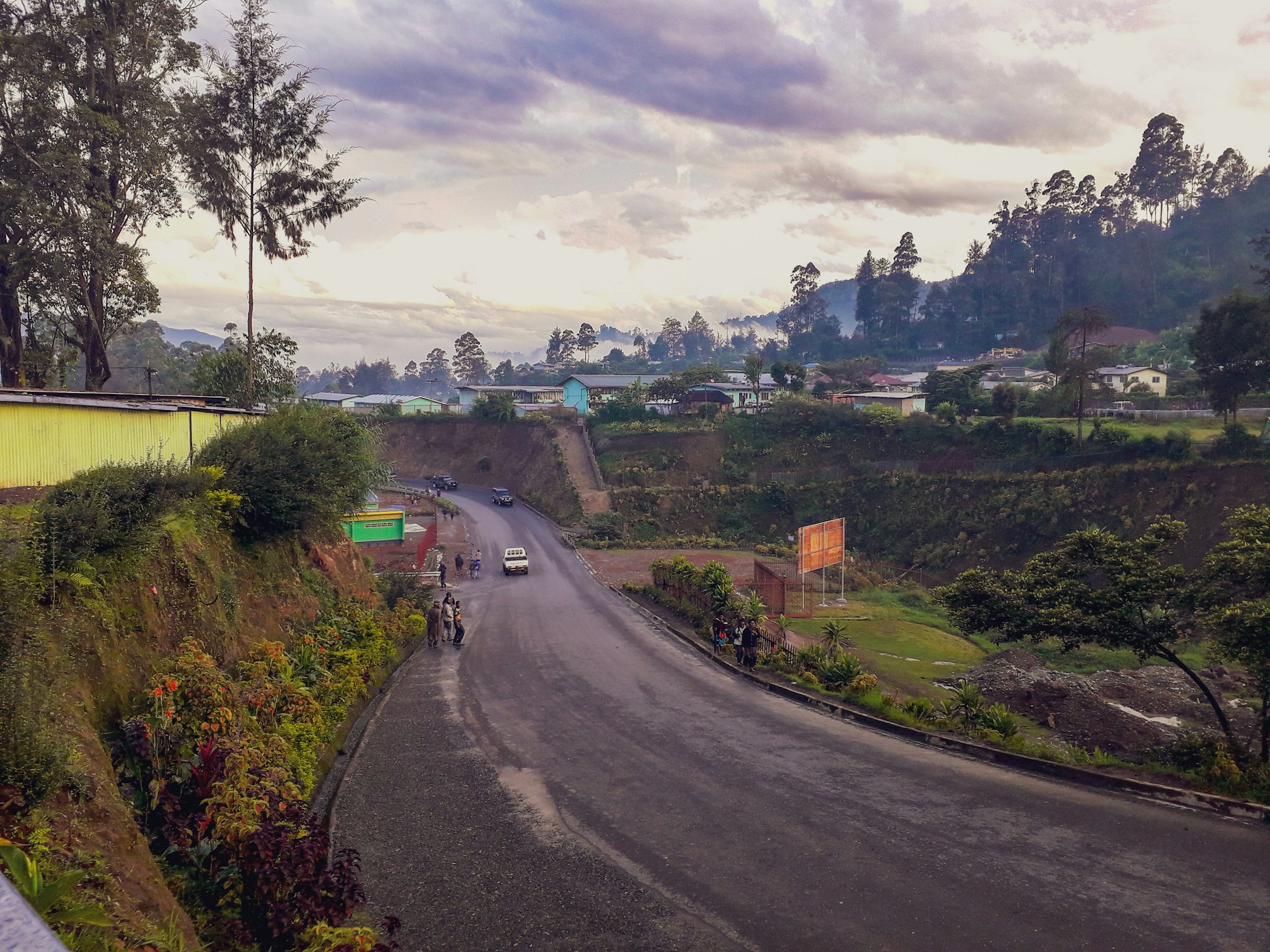
Papua New Guinea

Oceania
Capital:
Port Moresby
Currency:
Papua New Guinean Kina (PGK)
Risk:
High
📋

Health Overview

Papua New Guinea is one of the most biologically diverse; culturally extraordinary; and clinically demanding travel destinations in the world — the Kokoda Track; Kimbe Bay's world-class muck diving; the tribal cultures of the Highlands; the Bird of Paradise species; and 840 distinct languages representing 6-8% of all human languages on Earth. The pre-travel profile is complex: Level 3 advisory (crime; civil unrest; piracy); malaria throughout the entire country; Global Polio THN with circulating poliovirus; chloroquine resistance in BOTH P. falciparum AND P. vivax (one of only two countries globally — the other is Indonesia); multi-drug-resistant TB documented in Port Moresby; and healthcare that is severely limited outside the capital. PNG is not a destination for casual or underprepared travelers.

Key Health Risks

High
Malaria — Both P. falciparum and P. vivax Chloroquine-Resistant
PNG is one of only two countries globally (with Indonesia) where both major malaria species are chloroquine-resistant. P. falciparum (75% of cases) and P. vivax (25%) both require chloroquine-resistant-effective prophylaxis. Year-round transmission throughout the entire country including urban areas of Port Moresby and coastal resort areas. Prophylaxis is mandatory for every PNG traveler regardless of itinerary.
High
Violent Crime and Security
Port Moresby has one of the highest crime rates in the world — armed robbery; carjacking; home invasion; and opportunistic robbery targeting foreigners are common. The advisory specifically warns against using local taxis or buses (PMVs — public motor vehicles). Never walk alone; never walk at night; never display cash; jewelry; or electronics in public. Highlands region (except Mt. Hagen and Goroka towns): Level 3 — civil unrest; tribal fighting; limited government control; significant personal danger. The Kokoda Track has documented attacks on hikers including deaths. Bougainville near Panguna mine: Level 4 Do Not Travel.
Moderate
Multi-Drug-Resistant Tuberculosis
Papua New Guinea has documented MDR-TB — multi-drug-resistant Mycobacterium tuberculosis strains have been confirmed in Port Moresby and the Western Province. PNG has one of the highest TB burdens in the Asia-Pacific region. Risk to typical short-term tourists is low but non-negligible for travelers spending extended time in healthcare settings; overcrowded environments; or with significant close contact in local community settings. Healthcare workers; missionaries; and long-term travelers: TB skin test or IGRA testing before and after travel is standard.
⛑️

Health Risk Callout

PNG demands the most comprehensive malaria counseling in this batch by a wide margin — it's one of only two countries in the world where both P. falciparum AND P. vivax are chloroquine-resistant. This is something that experienced travel medicine providers know well but that general practice providers often miss. The corollary for treatment is equally important: a PNG-returning patient with P. vivax malaria should NOT be treated with chloroquine — failure is the expected outcome. The pre-exposure rabies discussion is also important: PNG has rabies; post-exposure treatment availability is essentially absent outside Port Moresby; and the 3-dose pre-exposure series is a meaningful clinical intervention that eliminates the immune globulin requirement after any bite.
🏥

Other Health Risks

Unexploded ordnance (WW2 UXO documented throughout PNG particularly on smaller islands — do NOT touch unknown metal objects; do NOT leave marked paths or trails in WW2 battle sites); Crocodiles (saltwater crocodiles in coastal and estuarine areas; freshwater species in rivers — same precautions as northern Australia); Schistosomiasis (freshwater exposure in rivers and lakes); Ross River and other arboviral diseases; Leptospirosis (freshwater/flood contact); Piracy (coastal and harbor waters of PNG — avoid sailing in PNG waters; Port Moresby harbor has documented piracy against vessels) | 2026 UPDATE: Poliovirus (cVDPV2): Confirmed circulating vaccine-derived poliovirus type 2 outbreak with a paralyzed child; multi-round vaccination response ongoing into 2026. Consistent with (and reinforces) the dossier's mandatory polio-booster guidance. (https://www.who.int/emergencies/disease-outbreak-news/item/2025-DON571, 2025-2026)
🗺

Regional Information

Regional Risk Callout
PNG's risk profile varies dramatically between regions. Port Moresby (National Capital District): highest crime in the country — armed robbery; carjacking; home invasion; piracy on the harbor — but headquarters of the best private medical care and the US Embassy. The Highlands: culturally extraordinary but high civil unrest; tribal conflict; limited road access; the specific State Dept advisory warning covers most of the Highlands (Simbu; Southern Highlands; Western Highlands; Hela; Enga) except the towns of Mt. Hagen and Goroka. Madang and Morobe coasts: better security; beautiful diving; moderate healthcare. East New Britain (Rabaul; Kokopo): active volcanoes (Tavurvur; Vulcan); historically significant WW2 sites; moderate security. Milne Bay and Kimbe Bay: world-class diving in areas with limited healthcare and moderate security. Kokoda Track (Northern Province): legendary WW2 trekking route — serious physical preparation required; potential for security incidents; healthcare is absent along the track itself.
Regional Healthcare Callout
Healthcare outside Port Moresby is extremely limited — regional hospitals in Madang; Lae; Goroka; Mt. Hagen; and Rabaul have very basic capability. Along the Kokoda Track; in Highlands villages; and on remote islands: no healthcare capability whatsoever. Medical evacuation to Australia (Brisbane or Cairns) is the standard for any condition beyond basic acute management. Travel insurance with air medical evacuation to Australia is MANDATORY for PNG — not optional. Medivac Pacific Services: +675-323-5626 (Port Moresby); 24-hour emergency +675-7683-5227.
💉

Vaccine and Malaria Prevention

💉 Entry Vaccine Required
None — PNG has no yellow fever entry requirements for US travelers arriving directly from the US unless arriving from a YF endemic country.
🛡️ Recommended Vaccines
CDC recommends Routine vaccines (MMR; Tdap; influenza; COVID-19 up to date); Hepatitis A (strongly recommended — significant enteric burden); Hepatitis B (recommended); Typhoid (recommended — significant food/water pathogen burden); Rabies (consider for extended stays; rural or wildlife exposure; healthcare worker; or trekking — post-exposure treatment is very difficult to obtain in PNG; pre-exposure vaccination is clinically important here); Japanese encephalitis (recommended for travelers spending significant time in rural areas with rice cultivation and pig farming — vector Culex mosquito; highest risk outside Port Moresby in rural provincial settings); Polio booster (mandatory — PNG is on active Global Polio THN with circulating poliovirus; confirm polio vaccination is current); Malaria prophylaxis (mandatory for all PNG itineraries — see malaria fields). Be sure to consult your Dr. prior to travel to discuss.
🦟 Malaria Information
  • Risk Level: High
  • Areas: All of Papua New Guinea — entire country throughout all islands; highlands; and coastal areas. PNG has one of the highest malaria burdens in the Pacific-Asia region. No malaria-free zones in PNG.
  • Recommended Drug: Atovaquone-proguanil; doxycycline; or mefloquine. Chloroquine is NOT effective for ANY species in PNG.
  • Drug Resistance: Yes

Papua New Guinea is one of only TWO countries globally (along with Indonesia) where BOTH P. falciparum AND P. vivax are chloroquine-resistant. This is a critically important clinical differentiator: the most common malaria in PNG is P. falciparum (75%) with P. vivax comprising approximately 25%. Both species have documented chloroquine resistance in PNG. Chloroquine and hydroxychloroquine are ineffective for prophylaxis. Use only atovaquone-proguanil; doxycycline; or mefloquine. For travelers who acquire P. vivax malaria in PNG and require treatment; artemether-lumefantrine or atovaquone-proguanil (not chloroquine) should be used. Long-term travelers with P. vivax exposure require consideration of primaquine or tafenoquine for radical cure (G6PD testing mandatory before prescribing).

High
👨

Physician Note

R
Dr. Robert
Emergency Medicine · 25+ Years · 40+ Countries

Papua New Guinea is the most challenging destination in this batch — and it generates the most complex pre-travel consultation. The malaria discussion requires extra time: PNG is one of only two countries globally where both P. falciparum AND P.

vivax are chloroquine-resistant. The clinical implication doesn't end with prophylaxis — it extends to treatment; because a returning PNG traveler with P. vivax malaria should NOT receive chloroquine (which is the typical P.

vivax treatment in most destinations where chloroquine sensitivity is retained). Artemether-lumefantrine or atovaquone-proguanil are the correct PNG P. vivax treatment regimens.

The security counseling is equally important and I am direct about it: PNG is not a backpacker destination; not a DIY trip; and not appropriate for budget travel. The State Dept advisory warns about attacks on hikers; PMVs being unsafe; and Level 3/4 areas covering large parts of the country. This is a destination that I only prepare patients for if they are going with an organized operator; a mission organization with security infrastructure; or a diving resort with controlled environment.

For those patients; I give them my full preparation and send them off with genuine excitement — PNG is extraordinary.

Pre-Departure Checklist

8+ Weeks

  • CDC recommends Malaria prophylaxis prescription (mandatory — atovaquone-proguanil
  • Doxycycline
  • Or mefloquine
  • NEVER chloroquine for any PNG itinerary)
  • Yellow fever vaccine if itinerary includes any YF endemic country before PNG
  • Hepatitis A
  • Typhoid
  • Rabies pre-exposure series (3 doses — strongly recommended
  • Post-exposure treatment essentially unavailable outside Port Moresby)
  • Japanese encephalitis for rural or Highlands itinerary
  • Polio booster confirmed (active Global Polio THN — PNG named
  • Confirm current polio immunity)
  • Security assessment for specific regions — contact PNG licensed operator and US Embassy Port Moresby for current threat assessment.

2–4 Weeks

  • Register with STEP
  • Medical evacuation insurance to Australia CONFIRMED (mandatory)
  • DEET 20%+ and permethrin-treated clothing
  • Azithromycin travelers' diarrhea kit
  • Water purification for remote areas
  • Full medication supply packed from home (pharmaceuticals scarce in PNG)
  • Medivac Pacific Services contact pre-loaded (+675-7683-5227)
  • Never use PMVs or local taxis.

Day Of

  • US Embassy Port Moresby +675-308-9100
  • Pacific International Hospital +675-324-2200
  • Medivac Pacific Services +675-7683-5227
  • Emergency 000
  • Police 112
  • Malaria prophylaxis in carry-on
  • Complete situational awareness briefing from tour operator or organizational security officer. Be sure to consult your Dr. prior to travel to discuss.
✈️

Trip Type Guidance

Adventure

  • Kokoda Track (one of the world's most significant WW2 trekking routes — Australian and PNG forces fought here in 1942
  • Extremely physically demanding
  • 96km through tropical jungle
  • 4-10 days depending on pace
  • Malaria prophylaxis mandatory
  • DEET all day
  • No healthcare on route
  • Guide through licensed operator REQUIRED
  • Security risk if attempting without licensed PNG operator
  • Must be fit and carry all supplies)
  • Kimbe Bay diving (world-class muck diving and coral reef in West New Britain
  • Relatively safe and organized dive resort environment
  • Malaria prophylaxis mandatory
  • Medical evacuation insurance essential).

Mission

  • PNG has extensive faith-based healthcare
  • Church-run schools and hospitals
  • And community development mission presence throughout the country — particularly in the Highlands
  • Sepik River region
  • And Milne Bay. Full expedition health preparation
  • AHA security briefing
  • Malaria prophylaxis
  • And organizational security protocols are required for all mission personnel.
🗒️

Notes

Special Evacuation Notes
Medical evacuation insurance with air evacuation to Australia is MANDATORY. Pacific International Hospital in Port Moresby is the best available local option but capability is limited. Brisbane; Australia (RBWH or PA Hospital) is the standard medical evacuation destination. Air Niugini and Virgin Australia operate flights from Port Moresby to Brisbane (approximately 3 hours). From remote areas (Highlands; Kokoda; outer islands); charter fixed-wing or helicopter to Port Moresby is required as the first step. All travelers must carry full medication supply from home — pharmaceuticals are scarce in PNG.
Safety Notes
The Level 3 advisory and the specific content of that advisory require honest clinical counseling. The advisory warns against using public motor vehicles (PMVs — the local bus system) and local taxis. It warns hikers that attackers have killed people on the Kokoda Track. It explicitly names the Highlands as Level 3 and the Panguna mine as Level 4. This is not a destination for solo travel; DIY travel; or tourism on a budget. PNG is appropriate for organized tours with licensed operators; dive resorts with controlled environments; development and mission workers with organizational security protocols; and motivated adventure travelers who understand and accept the risk and prepare comprehensively. For these travelers; PNG is an unforgettable destination. For everyone else; a different Pacific island trip is a better choice. Global Rescue is imperative here
partner recommendation
Medical Evacuation & Assistance
A medical crisis far from home can cost $50,000+ to evacuate. Global Rescue — the partner we personally trust — provides worldwide evacuation and round-the-clock medical assistance.
Get a quote
Good For
Adventure
Mission
Quick Info
  • Capital
    Port Moresby
  • Language
    Tok Pisin (most widely spoken); Hiri Motu; English (official); over 840 distinct indigenous languages — PNG has the highest linguistic diversity of any country in the world
  • Currency
    Papua New Guinean Kina (PGK)
  • State Dept Level
    3
  • Crime Risk
    Very High
  • Disaster Risk
    Very High — Papua New Guinea sits on the Pacific Ring of Fire; highly seismically active (M7.5 Highlands 2018; M6.0 Madang 2019; M7.6 New Ireland 2022); active volcanoes: Tavurvur (East New Britain); Manam Island; Mt. Ulawun; Mt. Langila; Karkar Island — multiple have erupted with deaths and evacuations in recent years; Severe Tropical Cyclone Maila (April 1-12 2026; Category 4-5 equivalent; 25+ deaths across PNG and Solomon Islands); tsunami risk from local and regional seismic events; flooding during heavy rain seasons
Water Safety
⛔️ Tap Water Not Safe to Drink
Tap water is NOT safe for drinking in Port Moresby or anywhere in PNG. Bottled water is essential throughout. In rural areas; boil all water. PNG's water infrastructure is inadequate and waterborne pathogens are common. Even in major cities; tap water safety is unreliable.
Top Hospital
Pacific International Hospital
Port Moresby
Best private hospital in PNG for international travelers — adequate for acute medical management including malaria; surgery; and trauma. English-speaking staff; upfront payment required. Tel: +675-324-2200 [VERIFY]. Also: Aspen Medical Harbour City clinic (private urgent care). Port Moresby General Hospital is the main public referral hospital but has limited resources; equipment shortages; and is not the recommended choice for travelers.
Emergency Numbers
000
Emergency
111
Ambulance
US EMbassy
'+675-308-9100 (US Embassy Port Moresby)
https://pg.usembassy.gov/
Resources
Primary Sources
Direct lines to the agencies that publish the world's most trusted travel-health guidance.