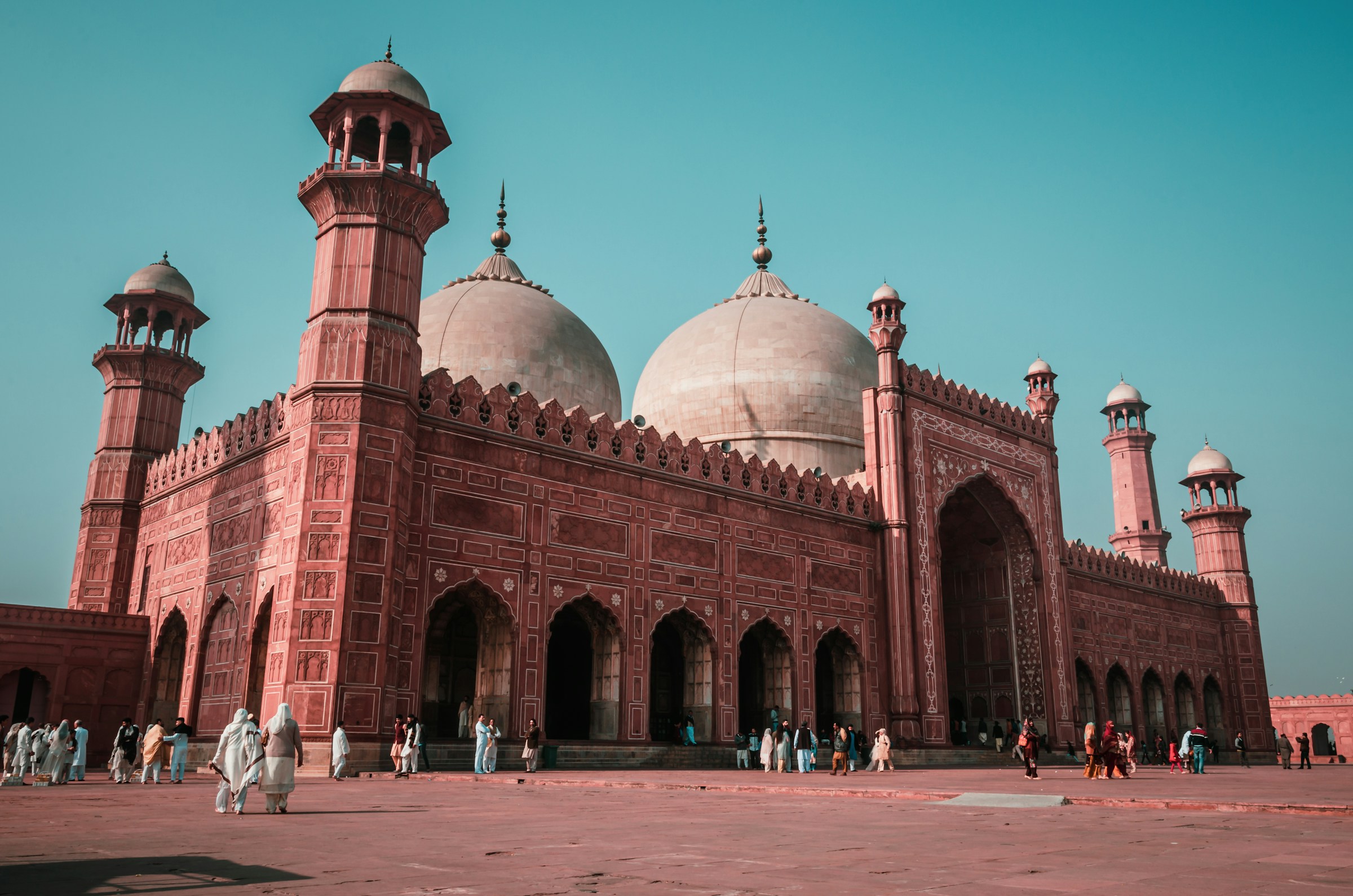
Pakistan

Asia
Capital:
Islamabad
Currency:
Pakistani Rupee (PKR)
Risk:
Very High
📋

Health Overview

Pakistan carries a Level 3 overall advisory with Level 4 Do Not Travel sub-zones in Balochistan; KP/FATA; and the Line of Control. The March 2026 consulate ordered departures represent a dramatic escalation: demonstrations at the Karachi and Lahore consulates turned violent on March 1-2 2026; the State Dept ordered non-emergency personnel to leave Lahore and Karachi; and as of March 13 2026 all consular services there remain suspended — Islamabad is the only functioning US mission. Clinically: Pakistan has four simultaneous active CDC Travel Health Notices (wild polio; XDR typhoid; dengue; measles); malaria throughout the country below 2500m; FAA has not assessed Pakistan's Civil Aviation Authority for international safety standards; and air quality in major cities is severely degraded. The pre-travel consultation for Pakistan is one of the most clinically substantive in all of South Asia.

Key Health Risks

High
Wild Poliovirus Type 1 — Ongoing Transmission
Pakistan and Afghanistan are the only two countries in the world where wild poliovirus type 1 (WPV1) transmission has never been interrupted. Pakistan has an active CDC Global Polio Travel Health Notice. Before travel: all adults who completed the full routine polio series must receive a single lifetime IPV booster dose. Any unvaccinated or incompletely vaccinated traveler must complete the full series before departure. Clinical context: WPV1 continues to be detected in both human stool samples and environmental wastewater surveillance in Pakistan. Polio eradication teams in Pakistan face specific security threats — the State Dept advisory notes that 'terrorists target polio eradication teams' in KP/FATA. The poliovirus risk is real and the booster recommendation for Pakistan is among the strongest in any destination worldwide outside a declared polio epidemic. Be sure to consult your Dr. prior to travel to discuss.
High
XDR Typhoid Fever — Ongoing Outbreak
Be sure to consult your Dr. prior to travel to discuss. Pakistan has an ongoing outbreak of extensively drug-resistant (XDR) typhoid fever per the CDC Travel Health Notice (posted May 30 2023; ongoing). This is the Salmonella Typhi H58 strain — resistant to ampicillin; chloramphenicol; trimethoprim-sulfamethoxazole; fluoroquinolones (ciprofloxacin); AND third-generation cephalosporins (ceftriaxone). Only azithromycin and carbapenems remain reliably effective. Key clinical implications: (1) Typhoid vaccine does not reliably protect against XDR strains — it is still recommended to reduce overall typhoid risk but patients must understand its limitations; (2) Returning travelers from Pakistan with fever require blood culture before empiric treatment; (3) Do NOT prescribe fluoroquinolone or cephalosporin as empiric typhoid treatment for Pakistan returnees; (4) Azithromycin self-treatment prescription is essential for all Pakistan travelers — if clinical dengue or XDR typhoid is suspected; azithromycin is appropriate first-line empiric coverage. Be sure to consult your Dr. prior to travel to discuss.
Very High
Terrorism and Security
Terrorism is the primary reason for Pakistan's Level 3 advisory and Level 4 sub-zones. Violent extremist groups — including Tehrik-e-Taliban Pakistan (TTP); Baloch Liberation Army; IS-Khorasan (IS-K) — conduct regular attacks. Attack targets include: transportation hubs; hotels; markets; malls; military and security forces sites; airports; trains; schools; hospitals; places of worship; tourist spots; and government buildings. The Level 4 sub-zones (Balochistan; KP/FATA; Line of Control) experience the most frequent attacks but terrorism has occurred in Islamabad; Lahore; and Karachi. The March 2026 ordered departures from Lahore and Karachi consulates resulted directly from violent protests at US diplomatic facilities — security risk is actively elevated for locations associated with the US. FAA has not assessed Pakistan's Civil Aviation Authority for international safety compliance — adds aviation safety uncertainty.
⛑️

Health Risk Callout

Pakistan generates the most complex and clinically urgent pre-travel conversation. The March 2026 consulate ordered departures are not historical — they are ongoing; Lahore and Karachi consular services remain suspended as of the time this dossier was written. The wild polio booster is mandatory; there are only two countries on earth where WPV1 transmission has never been interrupted; Pakistan is one of them. The XDR typhoid outbreak means that the standard South Asia typhoid treatment algorithm does not apply — azithromycin is the prescription to give. And the air quality in Lahore in winter is genuinely clinically relevant for any respiratory patient. Be sure to consult your Dr. prior to travel to discuss.
🏥

Other Health Risks

Air quality (Lahore and Karachi AQI regularly among world's worst; Lahore winter AQI frequently 300-500+; N95 respirator essential for Lahore winter travel); FAA has not assessed Pakistan's Civil Aviation Authority for international safety standards — consider this when booking flights; Pakistan International Airlines (PIA) history of safety incidents documented; consider international carriers for Pakistan travel; Earthquake (Pakistan sits on active seismic zone — 2005 Kashmir earthquake M7.6 killed 86000; seismic risk is significant throughout northern Pakistan and KP)
🗺

Regional Information

Regional Risk Callout
Pakistan's risk profile varies dramatically by province. Islamabad (capital; federal territory): Level 3 overall — most secure major city in Pakistan; best private hospitals; US Embassy present and functioning. Lahore (Punjab province): Level 3; historically safer than Peshawar; all US consular services suspended as of March 2026. Karachi (Sindh province): Level 3; highest crime rate in Pakistan; US consular services suspended March 2026. Khyber Pakhtunkhwa (KP) including former FATA — Peshawar and all of KP: Level 4 Do Not Travel — active terrorist and insurgent groups; do not travel for any reason. US Consulate Peshawar suspended March 2026. Balochistan province — Quetta and entire province: Level 4 Do Not Travel — active terrorist attacks; kidnappings; do not travel for any reason. Gilgit-Baltistan (Karakoram; K2 region): Level 3 — significant trekking destination; access is via Islamabad; security varies; the Karakoram Highway traverses some security-sensitive areas. Line of Control (Kashmir border): Level 4 — militant groups; India-Pakistan military presence; do not approach. Be sure to consult your Dr. prior to travel to discuss.
Regional Healthcare Callout
Healthcare in Pakistan is highly variable. In Islamabad: Shifa International Hospital and Islamabad Diagnostic Center provide reasonable private care. In Lahore and Karachi: some private hospitals (South City; Ziauddin) are adequate for many conditions but complex emergencies should evacuate to Dubai (1.5 hours) or Bangkok/Singapore. Gilgit-Baltistan and KP: healthcare is severely limited; trekkers and mountaineers in Gilgit-Baltistan should have comprehensive helicopter evacuation coverage. FAA not having assessed Pakistan's Civil Aviation Authority adds aviation safety context for domestic flights. Comprehensive travel insurance with air medical evacuation is essential.
💉

Vaccine and Malaria Prevention

💉 Entry Vaccine Required
Yellow fever vaccine is required for travelers ≥1 year old arriving from countries with risk for YF virus transmission; including travelers transiting >12 hours in an airport located in a YF-endemic country. This is a FROM-endemic-country requirement — not a universal requirement.
🛡️ Recommended Vaccines
CDC recommends routine vaccines up to date (MMR; Tdap; influenza; COVID-19); Polio booster — MANDATORY: Pakistan has ongoing wild poliovirus type 1 (WPV1) transmission; adults who completed full routine polio series must receive a single lifetime IPV booster before travel; any unvaccinated or incompletely vaccinated traveler must complete the full series; Hepatitis A (strongly recommended — food and water safety highly variable throughout Pakistan); Hepatitis B; Typhoid (recommended with explicit XDR counseling — vaccine does NOT protect against XDR strains; azithromycin self-treatment is essential); Malaria prophylaxis (for areas below 2500m — most of Pakistan including all major cities except high-altitude Gilgit-Baltistan); Rabies pre-exposure series (consider for rural travel or work involving animal contact — post-exposure treatment availability is unreliable outside Islamabad/Lahore/Karachi) Be sure to consult your Dr. prior to travel to discuss.
🦟 Malaria Information
  • Risk Level: High
  • Areas: Malaria risk throughout Pakistan below 2500m altitude — including Islamabad; Lahore; Karachi; and all major cities (unlike Bangladesh where malaria is geographically restricted to CHT only). P. vivax approximately 80%; P. falciparum approximately 20%; P. knowlesi rare. Malaria-free above 2500m altitude (approximately the elevation of the Gilgit-Baltistan highlands and K2 base camp approach routes).
  • Recommended Drug: Atovaquone-proguanil; Chloroquine; Doxycycline; Mefloquine; or Tafenoquine. Unlike Myanmar's eastern border areas; Pakistan does not have confirmed widespread mefloquine resistance — chloroquine is listed as an option for areas with predominantly P. vivax; however atovaquone-proguanil or doxycycline are preferred for mixed P. vivax/P. falciparum areas to provide full coverage.
  • Drug Resistance: No

Pakistan malaria is distinct from Bangladesh in that it affects travelers to ALL major cities including Islamabad and Lahore. Prophylaxis is indicated for any Pakistan traveler spending time outside of 2500m+ altitude areas. P. vivax is predominant (80%) but P. falciparum (20%) is clinically relevant and requires effective prophylaxis. Atovaquone-proguanil is a reliable first-line choice for most Pakistan itineraries; doxycycline is a cost-effective alternative for extended stays. Post-travel follow-up is important for P. vivax due to the hepatic hypnozoite reservoir; radical cure with primaquine or tafenoquine (after G6PD testing) should be discussed for any P. vivax exposure.

High
👨

Physician Note

R
Dr. Robert
Emergency Medicine · 25+ Years · 40+ Countries

The March 2026 ordered departures from Lahore and Karachi are not background noise — they are a live, ongoing security crisis that means US citizens traveling to those cities have no US government consular support available. I make this explicit: 'If you are arrested; have a medical emergency; or lose your passport in Lahore or Karachi right now; there is no US consulate to call.' That changes the risk calculus significantly. The wild poliovirus booster is mandatory — I frame it to patients as: 'Pakistan is one of only two countries on earth where polio has never been eradicated; your childhood vaccines still protect you but this trip requires a booster.' And the XDR typhoid story mirrors Bangladesh — azithromycin is the prescription to write; the standard cipro/ceftriaxone algorithm doesn't apply to Pakistan typhoid.

Be sure to consult your Dr. prior to travel to discuss these details.

Pre-Departure Checklist

8+ Weeks

  • Be sure to consult your Dr. prior to travel to discuss
  • CDC recommends Polio booster
  • Pakistan has ongoing wild poliovirus WPV1 transmission
  • Typhoid vaccine with explicit XDR counseling
  • Hepatitis A and B
  • Malaria prophylaxis (atovaquone-proguanil or doxycycline — for below 2500m Pakistan including all major cities)
  • Rabies pre-exposure series for rural/animal-contact itineraries
  • MMR
  • Tdap
  • Influenza
  • COVID-19 up to date.

2–4 Weeks

  • Register with STEP — US Embassy Islamabad ONLY (Lahore and Karachi consulates suspended)
  • Comprehensive travel insurance with air medical evacuation to Dubai or Bangkok
  • Azithromycin self-treatment prescription for XDR typhoid (with counseling: do not self-treat fever without medical consultation
  • Azithromycin for suspected typhoid or dengue-secondary infection)
  • DEET 30%+ and permethrin for dengue/malaria prevention
  • N95 respirator for Lahore winter air quality (AQI 300-500+)
  • Review all Level 4 sub-zones and confirm itinerary avoids Balochistan
  • .

Day Of

  • US Embassy Islamabad +92-51-201-4000 (ONLY functioning US mission as of March 2026)
  • Police 15
  • Rescue/ambulance 1122 (Punjab)
  • Edhi ambulance 115
  • Book on international carriers (Emirates
  • Qatar
  • Turkish) — FAA has not assessed Pakistan's Civil Aviation Authority
  • Avoid public transport (US government employee restriction policy reflects genuine risk)
  • N95 mask before outdoor exposure in Lahore winter
  • Daily dengue DEET application throughout country.
✈️

Trip Type Guidance

Mission

  • Pakistan has substantial missionary and humanitarian mission activity — particularly development NGOs
  • Education organizations
  • And faith-based groups in Punjab and Sindh. Polio booster is mandatory
  • XDR typhoid azithromycin pack is essential
  • Malaria prophylaxis for all below-2500m areas
  • Dengue prevention year-round
  • Comprehensive security briefing from organizational security officer is required before any Pakistan mission deployment. All consular services at Lahore and Karachi suspended — factor this into security planning.
🗒️

Notes

Special Evacuation Notes
CRITICAL: As of March 13 2026 all US consular services at Lahore and Karachi remain suspended. US Consulate Peshawar operations suspended March 2 2026. US Embassy Islamabad is the ONLY functioning US mission for US citizen services in Pakistan. Air medical evacuation from Pakistan: Dubai (approximately 1.5-2 hours) or Bangkok/Singapore (approximately 3-5 hours) are the primary routing options. FAA has not assessed Pakistan's Civil Aviation Authority — book on international carriers (Emirates; Qatar Airways; Turkish Airlines; Etihad) for the most reliable aviation safety standards when traveling to and from Pakistan.
Safety Notes
Pakistan is a Level 3 country with Level 4 sub-zones that have some of the world's most active terrorist and insurgent groups. The March 2026 situation represents an active diplomatic security crisis. Key guidance: (1) DO NOT travel to Balochistan or KP/FATA for any reason — Level 4; (2) DO NOT approach the Line of Control; (3) US consular support is severely limited outside Islamabad — all travel must account for this; (4) Terrorism: vary your routes; avoid predictable patterns; do not use public transportation (prohibited for US government employees per the advisory); (5) Social media: be extremely cautious about any content that could be perceived as critical of the military or government — detention risk is real; (6) Dual nationals: Pakistan does not consistently recognize dual nationality.
partner recommendation
Medical Evacuation & Assistance
A medical crisis far from home can cost $50,000+ to evacuate. Global Rescue — the partner we personally trust — provides worldwide evacuation and round-the-clock medical assistance.
Get a quote
Good For
Mission
Quick Info
  • Capital
    Islamabad
  • Language
    Urdu (national official language); English (used in government and business); Punjabi; Sindhi; Pashto; Balochi; regional languages
  • Currency
    Pakistani Rupee (PKR)
  • State Dept Level
    3
  • Crime Risk
    Very High
  • Disaster Risk
    High — (1) Earthquake: Pakistan has significant seismic history; the 2005 Kashmir earthquake M7.6 killed 86000 people; the Himalayan collision zone generates regular seismic events; northern Pakistan and KP are in an active seismic zone; (2) Monsoon flooding: June-October; Pakistan experienced catastrophic flooding in 2022 affecting 33 million people; Indus River flooding is an annual event of variable severity; (3) Avalanche: relevant for Gilgit-Baltistan mountaineering season (June-August).
Water Safety
⛔️ Tap Water Not Safe to Drink
Tap water is NOT safe anywhere in Pakistan. Islamabad; Lahore; Karachi; Peshawar; Quetta; and all cities and towns — do not consume tap water or use ice made from tap water. Bottled water is widely available in major cities. Rural and tribal areas: water purification is essential. Gilgit-Baltistan: mountain spring water may look clean but should be filtered or purified.
Top Hospital
Aga Khan University Hospital (AKUH)
Karachi
Pakistan's best hospital by international standards — Joint Commission International (JCI) accredited; affiliated with international academic medical network; full emergency and specialist capability; English-speaking staff throughout. Note: all US consular services at Karachi suspended March 2026 — travel to Karachi carries additional US citizen support limitations. Shifa International Hospital (Islamabad) is the recommended option for travelers in or near the capital — modern; English-speaking staff; reliable for most acute medical needs. Pakistan Institute of Medical Sciences (PIMS) in Islamabad is the major public referral hospital.
Emergency Numbers
15 (police); 1122 (rescue/ambulance — Punjab); 115 (Edhi ambulance — national)
Emergency
1122 (Punjab); 115 (Edhi Foundation ambulance — nationwide)
Ambulance
US EMbassy
'+92-51-201-4000 (US Embassy Islamabad — ONLY functioning US mission as of March 2026)
https://pk.usembassy.gov/
Resources
Primary Sources
Direct lines to the agencies that publish the world's most trusted travel-health guidance.