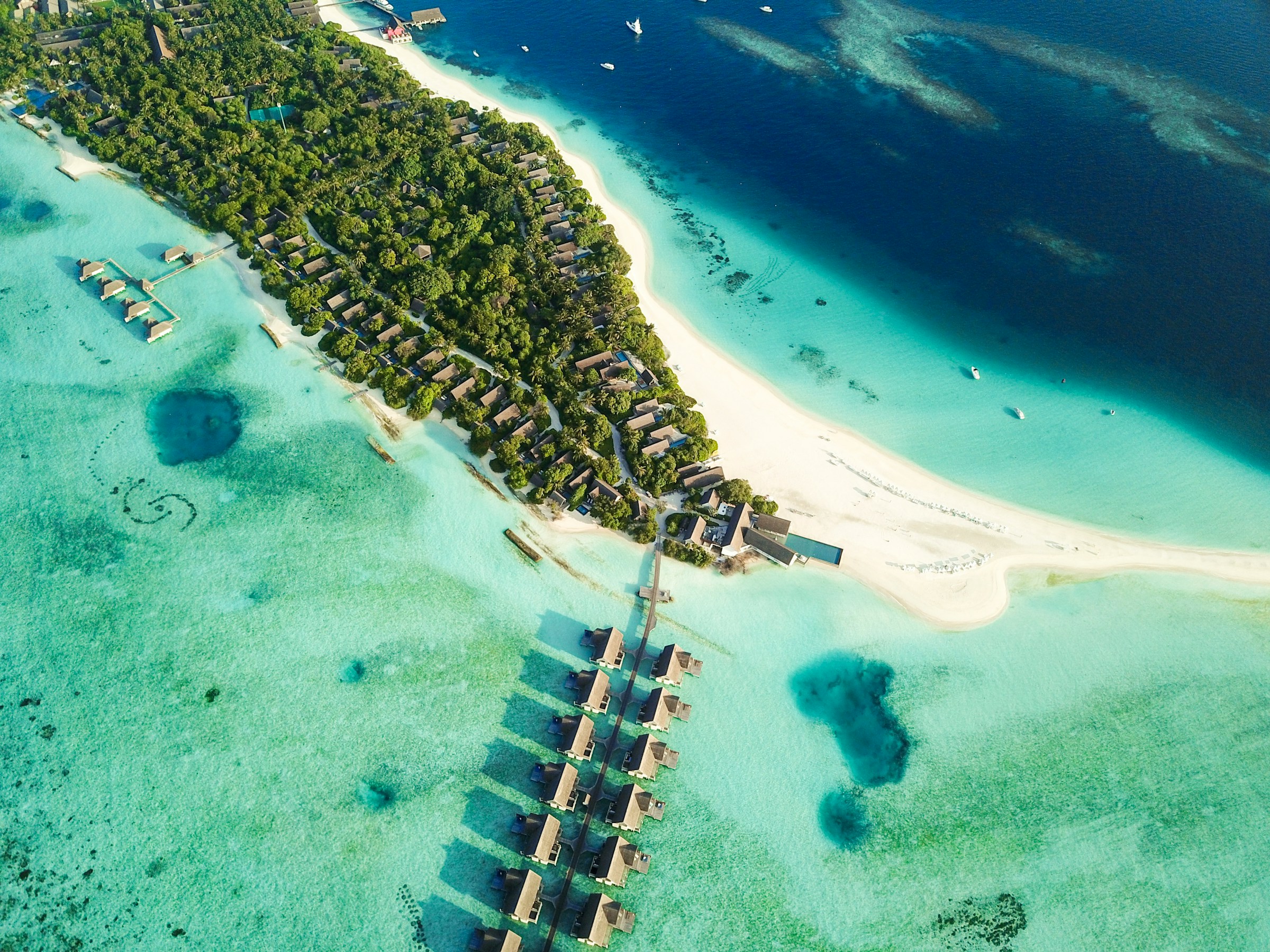
Maldives

Asia
Capital:
Malé
Currency:
Maldivian Rufiyaa (MVR); US dollars widely accepted at resorts
Risk:
Low-Moderate
📋

Health Overview

The Maldives — 26 coral atolls; 1192 islands; world-class diving and snorkeling; spectacular overwater bungalow resorts; and extraordinary marine biodiversity — is one of the world's premier luxury travel destinations and carries a Level 2 terrorism advisory. The health profile is mostly clean: no malaria; tap water variable depending on resort desalination vs. island sources; active Global Dengue THN with Maldives specifically named. But the pre-travel conversation has one distinctly important clinical feature: the Maldives is a world-class diving destination; and decompression illness (DCI/the 'bends') is the primary serious medical emergency for divers — the nearest hyperbaric chamber is in Colombo; Sri Lanka or Singapore; meaning DCI management requires air evacuation. There is no physical US Embassy in the Maldives; US citizens are served by the Embassy in Colombo; Sri Lanka. Be sure to consult your Dr. prior to travel to discuss.

Key Health Risks

Moderate-High
Decompression Illness (DCI) — Primary Medical Emergency
The Maldives is consistently ranked among the world's top 3-5 diving destinations — Hanifaru Bay (UNESCO Biosphere Reserve; manta rays); Kandooma Thila; Fish Head; Maaya Thila; Banana Reef — with exceptional wall diving; drift diving; and pelagic marine life encounters. Decompression illness (DCI; 'the bends') is the primary serious medical emergency for Maldives travelers. Clinical context: DCI results from nitrogen bubbles forming in tissues after ascent from depth; symptoms range from joint pain and fatigue (Type I) to neurological deficits; spinal cord involvement; and pulmonary embolism (Type II). Treatment requires hyperbaric oxygen (HBO) recompression therapy. The nearest functioning hyperbaric chamber facilities: Colombo; Sri Lanka (approximately 90 minutes by air from Malé); Singapore (approximately 5 hours). Treatment delay in DCI worsens outcomes. Practical guidance: (1) All divers should carry DAN (Divers Alert Network) insurance which is specifically designed for dive emergency evacuation; (2) Follow safe diving profiles — no-decompression limits; safety stops; conservative ascent rates; (3) Do not fly within 12-24 hours after the final dive (24 hours after decompression dives); (4) Be aware of decompression sickness symptoms and seek care immediately if they develop.
Moderate
Dengue — Active THN
The Maldives is specifically named in the CDC Updated Global Dengue Travel Health Notice (March 23 2026). Dengue is a year-round risk in the Maldives — Aedes aegypti mosquitoes are present on inhabited islands including resort islands. Risk is higher in densely populated Malé and local islands than at remote water-villa resorts where mosquito habitat is more limited; but dengue risk is present throughout the atoll system. Prevention: DEET 30%+ on exposed skin (particularly at dawn and dusk when Aedes feeding is highest); permethrin-treated clothing for local island excursions; note that Aedes aegypti also bites during daylight hours. No dengue vaccine is available for naive travelers.
Moderate
Marine Hazards and Reef Safety
The Maldives' coral reef ecosystem contains several clinically significant marine hazards: (1) Stonefish (Synanceia verrucosa) — world's most venomous fish; camouflaged as coral; painful and potentially life-threatening envenomation; wear reef shoes when walking on reef areas; (2) Cone shells (Conus geographus — 'geography cone') — deadly venom; do not pick up cone shells from the ocean floor; there is no antivenom; (3) Crown-of-thorns starfish — venomous spines; painful puncture wounds; (4) Reef sharks (blacktip; whitetip; nurse sharks): generally docile; respect proximity guidelines; do not hand-feed; (5) Strong tidal currents: Maldivian drift diving involves purposeful use of currents but miscalculating currents during snorkeling can be dangerous; (6) Coral cuts: coral abrasions commonly become infected in tropical environments — clean thoroughly; apply antibiotics promptly.
⛑️

Health Risk Callout

The Maldives consultation is surprisingly substantive for what many patients think of as a pure luxury beach holiday. The yellow fever entry rule is the first thing worth clarifying — it trips people up, but it applies only if you're arriving from or transiting a country with yellow fever risk, not coming straight from the US, so most travelers don't need it; where it matters is the itinerary routing through an African or South American hub. Then the decompression illness discussion for any diver: I recommend a Global Rescue membership as a standard part of the Maldives consultation — for a remote atoll, evacuation and field rescue to definitive care is the thing you actually can't improvise, and Global Rescue gets you to your hospital of choice. For divers, add dedicated dive-accident coverage (such as DAN) for recompression treatment on top of that. The dengue active THN is worth 30 seconds. And the no-US-Embassy note is worth making: 'If you have a serious emergency in the Maldives; the nearest US Embassy is in Sri Lanka; that's worth knowing.'
🏥

Other Health Risks

Terrorism context (Level 2 advisory — the Maldives has experienced radicalization concerns; the November 2007 explosion in Sultan Park was the first terrorist attack in Maldivian history; the country has had documented IS-influenced radicalization among youth; the risk is real but low for resort travelers who remain on private resort islands and avoid politically charged situations in Malé); Sunburn and UV radiation (Indian Ocean equatorial UV index is extreme year-round — typically 12-14; SPF 50+ sunscreen is non-negotiable; reef-safe sunscreen required at most Maldivian resorts to protect coral); Alcohol regulations (Maldives is a Muslim country; alcohol is only available at licensed tourist resorts and liveaboards; possession of alcohol on local islands is illegal — critical for travelers island-hopping or visiting local communities); No physical US Embassy in Maldives (nearest is in Colombo; Sri Lanka — emergency assistance available by phone but in-person consular support requires air travel to Sri Lanka)
🗺

Regional Information

Regional Risk Callout
The Maldives is a geographically dispersed atoll nation — 1192 islands spread across 90000 square kilometers of Indian Ocean with only 200+ inhabited. Risk profile is broadly uniform across the islands with some distinctions. Malé (capital island; 240000 people in approximately 5.8 sq km — one of world's most densely populated cities): dengue risk is higher due to dense urban population; best available healthcare (ADK Hospital); crime risk is higher than resort islands; political and terrorism incidents more likely here than at remote resorts. Resort islands (private luxury islands throughout the atolls): extremely safe environment; dengue risk lower but still present; marine hazards are the primary clinical concern; decompression illness is the emergency. Southern atolls (Addu; Seenu; Fuvahmulah): more remote; less healthcare infrastructure; evacuation to Malé required for any medical emergency. Liveaboard dive operations: traveling to remote dive sites across multiple atolls; farthest from any medical care; evacuation times can be 6+ hours. Global Rescue is a strong recommendation here.
Regional Healthcare Callout
Healthcare in the Maldives is limited to Malé for anything beyond basic acute care. The Maldives has NO functioning hyperbaric chamber for decompression illness treatment — the single greatest medical evacuation risk for this destination. Remote resort islands: initial resuscitation and stabilization only; air transfer to Malé then international transfer. Seaplane or speedboat transport from remote atolls to Malé adds significant time before air evacuation can begin. DAN (Divers Alert Network) insurance is strongly recommended for any diving itinerary.
💉

Vaccine and Malaria Prevention

💉 Entry Vaccine Required
Yellow fever vaccine is required only for travelers aged ≥9 months arriving from — or who have transited more than 12 hours in — a country with risk of yellow fever transmission; a valid ICVP must then be presented. It is NOT a universal requirement: travelers arriving directly from the United States or other non-risk countries do not need it.
🛡️ Recommended Vaccines
CDC recommends routine vaccines up to date (MMR; Tdap; influenza; COVID-19); Yellow fever vaccine (required only for arrivals ≥9 months coming from or transiting >12 hours in a country with risk of yellow fever transmission — NOT required for travelers arriving directly from the US or other non-risk countries; when applicable, ICVP is valid beginning 10 days after vaccination); Hepatitis A (recommended for local island and non-resort travel; food safety more variable outside major resorts); Hepatitis B (recommended for extended stays) Be sure to consult your Dr. prior to travel to discuss.
🦟 Malaria Information

No malaria risk.

Moderate
👨

Physician Note

R
Dr. Robert
Emergency Medicine · 25+ Years · 40+ Countries

The Maldives consultation surprises patients in several ways. First: the yellow fever entry requirement is universal — every traveler regardless of origin needs a valid ICVP; this is the same requirement as Myanmar and it catches many patients off guard ('But I'm going to a tropical paradise; not a disease area'). Second: DCI evacuation.

When I tell a diver that there is no hyperbaric chamber anywhere in the Maldives and that DCI treatment requires evacuation to Colombo; they understand why DAN insurance is not optional. Third: the dengue active THN. Maldives is specifically named — this is not just a general tropical country warning; the active THN means current transmission is elevated.

And fourth: no physical US Embassy. If a US citizen has a serious emergency in the Maldives; help is 90 minutes away in Sri Lanka by air. These four points together make the Maldives one of the more interesting — and important — pre-travel consultations for what patients assume will be a medically uneventful beach holiday.

Be sure to consult your Dr. prior to travel to discuss. Global Rescue is imperative.

Pre-Departure Checklist

8+ Weeks

  • Be sure to consult your Dr. prior to travel to discuss
  • CDC recommends Yellow fever vaccine — REQUIRED for entry
  • Universal requirement for ALL arrivals ≥9 months old regardless of origin
  • Hepatitis A and B for extended stays or local island travel
  • MMR
  • Tdap
  • Influenza
  • COVID-19 up to date.

2–4 Weeks

  • Register with STEP — US Embassy Colombo for Maldives
  • DAN (Divers Alert Network) dive insurance — strongly recommended for any diving itinerary
  • Specifically covers hyperbaric evacuation to Colombo
  • Comprehensive travel insurance with air medical evacuation
  • DEET 30%+ (dengue active THN
  • Maldives specifically named
  • Reef-safe sunscreen SPF 50+ (required at most Maldivian resorts
  • Indian Ocean UV index 12-14 year-round)
  • No alcohol to pack for any local island visits (illegal outside licensed resort islands).

Day Of

  • US Embassy Colombo +(94)(11) 202-8500 (Maldives has no physical US Embassy)
  • DAN emergency line pre-programmed (+1-919-684-9111)
  • Ambulance 102
  • Police 119
  • Reef shoes before entering any ocean from shore
  • DEET before excursions to local islands
  • Do not fly within 24 hours of final dive (decompression illness prevention)
  • No-decompression limits strictly followed.
✈️

Trip Type Guidance

Beach

  • The Maldives is the definitive Indian Ocean luxury beach and dive destination. Trip planning note: YF vaccine required for ALL arrivals
  • Obtain ICVP well in advance (must be issued at least 10 days before arrival at an authorized YF vaccination center). DAN dive insurance strongly recommended for any diving itinerary. DEET 30%+ for dengue prevention particularly on local island excursions. Decompression illness awareness and DAN emergency number (US: +1-919-684-9111) pre-programmed in phone before departure.
🗒️

Notes

Special Evacuation Notes
CRITICAL: There is NO physical US Embassy in the Maldives as of March 2026 (physical location anticipated to open early 2026 per the State Dept advisory). US citizen emergencies are handled by the US Embassy in Colombo; Sri Lanka: +(94)(11) 202-8500. The absence of a hyperbaric chamber in the Maldives means ALL decompression illness requires air evacuation to Colombo (approximately 90 minutes) or Singapore — DAN dive insurance is essential for any diving itinerary. Travel insurance with air medical evacuation is mandatory for the Maldives.
Safety Notes
The Maldives is a very safe travel destination for crime. The primary safety concerns are environmental: (1) Marine safety: rip currents are the most underappreciated hazard for snorkelers — ask your resort dive instructor about current conditions before snorkeling at any reef passage; always snorkel with a buddy; never alone; (2) Reef walking: wear reef shoes; never walk barefoot on reef areas (stonefish; sea urchins; coral cuts); (3) Cone shells: never pick up cone shells from the ocean floor — the 'geography cone' (Conus geographus) is lethal and there is no antivenom; (4) Sun: equatorial UV index of 12-14 year-round — SPF 50+ application every 90-120 minutes during outdoor activity; (5) Alcohol: Maldives is a Muslim-majority country; alcohol is only legal on licensed resort islands; carry no alcohol to local islands or Malé; (6) Photography: photography of police; military personnel; and certain government buildings may be restricted; use common sense; (7) Terrorism: be aware of surroundings particularly in Malé; the resort island environment is extremely low-risk.
partner recommendation
Medical Evacuation & Assistance
A medical crisis far from home can cost $50,000+ to evacuate. Global Rescue — the partner we personally trust — provides worldwide evacuation and round-the-clock medical assistance.
Get a quote
Good For
Beach
Quick Info
  • Capital
    Malé
  • Language
    Dhivehi (official Maldivian language); English (widely spoken in tourism industry and government)
  • Currency
    Maldivian Rufiyaa (MVR); US dollars widely accepted at resorts
  • State Dept Level
    2
  • Crime Risk
    Low (resort islands have extremely low crime; Malé has moderate petty crime and pick-pocketing)
  • Disaster Risk
    Moderate — Indian Ocean geography creates climate hazards: monsoon seasons (northeast monsoon November-March; southwest monsoon May-October); occasional tropical cyclones in the South Indian Ocean; rising sea levels threaten low-lying atolls (average elevation 1.8m above sea level — the Maldives is among the world's most climate-vulnerable nations); rip currents at reef passages; strong tidal flows between atolls; occasional rough seas affecting seaplane and speedboat transfers.
Water Safety
⛔️ Tap Water Not Safe to Drink
Tap water status is variable by location. Major luxury resorts: provide desalinated or reverse-osmosis treated water — safe and available as complimentary bottled water. Malé and densely populated local islands: tap water is generally not recommended for consumption; use bottled water or resort-provided water. Remote island and liveaboard: use resort/vessel-provided water exclusively; do not use tap water for brushing teeth on local guesthouses without confirming the source.
Top Hospital
ADK Hospital
Malé
Maldives' primary hospital — full emergency capability by Maldivian standards; adequate for trauma stabilization; acute medical emergencies; and obstetric complications. English-speaking staff. Tel: +960-331-3553 [VERIFY current number]. Indira Gandhi Memorial Hospital (IGMH) is the main public hospital in Malé. Both are adequate for initial stabilization but not for complex surgery; ICU-dependent care; or decompression illness treatment. Serious emergencies: air evacuation to Colombo (ADK Hospital; Lanka Hospitals; Nawaloka Hospital in Sri Lanka — approximately 90 minutes) or Singapore (approximately 5 hours) is the standard routing.
Emergency Numbers
119 (police); 102 (ambulance); 118 (fire)
Emergency
102
Ambulance
US EMbassy
'+(94)(11) 202-8500 (US Embassy Colombo; Sri Lanka handles Maldives — physical Maldives location anticipated to open early 2026; call Colombo for all US citizen emergencies)
https://mv.usembassy.gov/
Resources
Primary Sources
Direct lines to the agencies that publish the world's most trusted travel-health guidance.