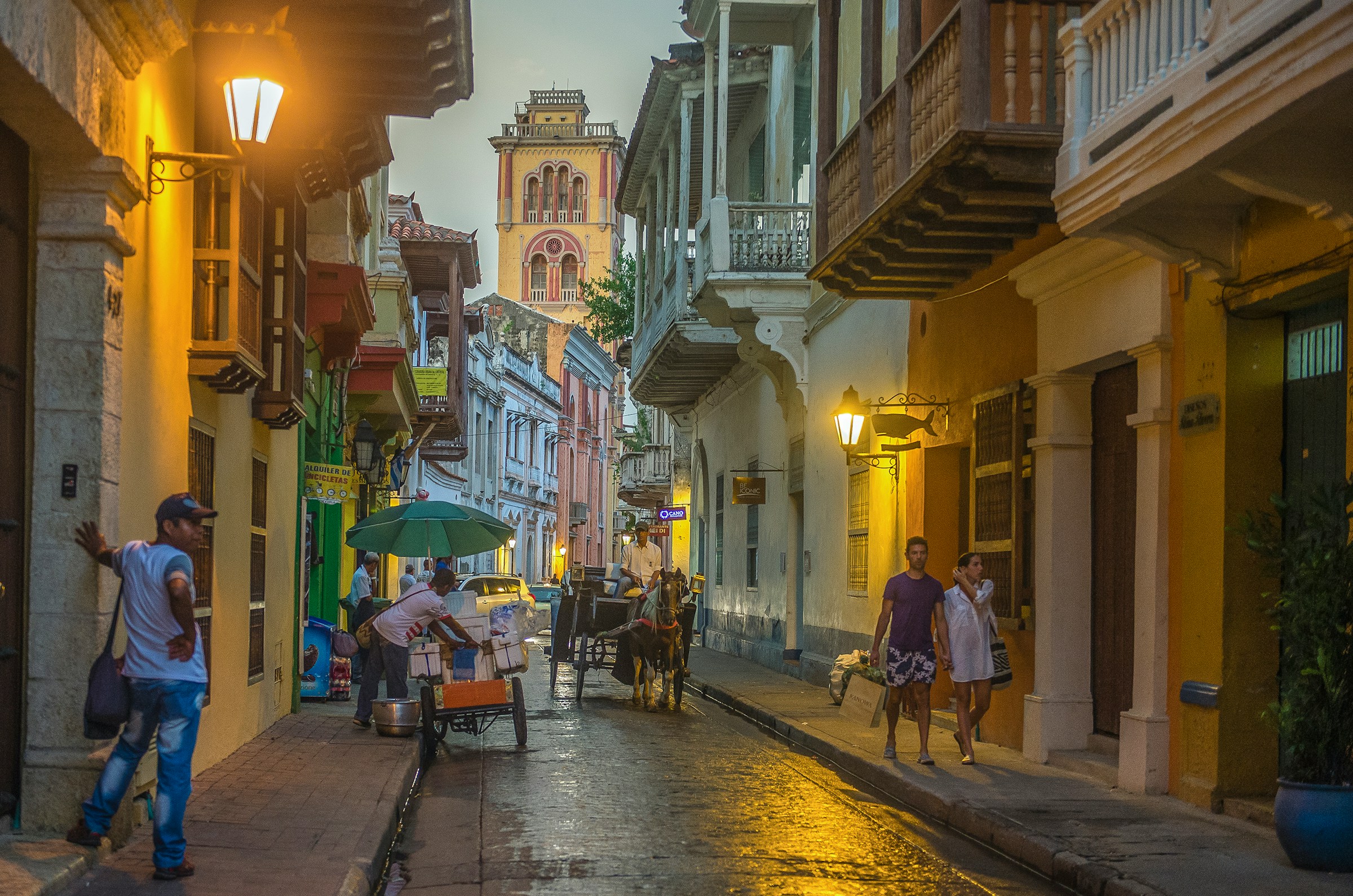
Colombia

South America
Capital:
Bogotá
Currency:
Colombian Peso (COP)
Risk:
High
📋

Health Overview

Colombia is a country of extraordinary geographic and cultural richness — and a Level 3 State Department advisory that demands serious preparation. An active CDC Level 2 Travel Health Notice for Yellow Fever (September 2, 2025) documents new cases in areas bordering historically endemic zones, making yellow fever vaccination non-negotiable for most itineraries outside Bogotá and the major cities. Malaria is present throughout rural and jungle regions as a mix of chloroquine-resistant P. falciparum and P. vivax. The contrast between Colombia's world-class private medical infrastructure in Bogotá and Medellín, and the complete medical absence in border and jungle regions, makes accurate itinerary-based risk assessment essential. A prepared traveler receives yellow fever vaccine, confirms malaria prophylaxis for any rural itinerary, avoids all Level 4 zones, never uses street taxis, and carries comprehensive evacuation insurance.

Key Health Risks

High
Yellow Fever Active Outbreak
A CDC Level 2 Travel Health Notice (September 2, 2025) documents an increased number of yellow fever cases in Colombia, including in new areas bordering historically recommended zones. Yellow fever is a potentially fatal flavivirus with no treatment — vaccination is the only protection. The vaccine requires 10 days to confer immunity. Travelers who declined YF vaccination based on outdated maps of limited-recommendation areas may now be in a risk zone. Review the current CDC map against your specific itinerary before departure.
High
Kidnapping and Violent Crime
Colombia has one of the highest kidnapping rates in the Western Hemisphere. Armed criminal organizations and terrorist groups (ELN, FARC dissidents) operate throughout Level 4 areas and near all land borders. Express kidnappings occur in urban areas. US government employees cannot use street taxis, ride motorcycles, use unprearranged public transportation, or travel to any land borders without special authorization. These restrictions apply to all US citizens traveling safely in Colombia.
Moderate-High
Dengue Fever
Colombia is currently named on the CDC Global Dengue Level 1 Travel Health Notice (March 23, 2026). Dengue is endemic year-round throughout Colombia below 1,700m elevation. All four serotypes circulate. DEET 20%+ is mandatory. Post-travel fever within 2 weeks requires evaluation — no ibuprofen or aspirin pending dengue ruling.
⛑️

Health Risk Callout

The yellow fever situation in Colombia is the most clinically urgent development for travel medicine providers: an active CDC Level 2 outbreak notice (September 2, 2025) documents cases in new areas. Travelers to Colombia outside the major cities need yellow fever vaccination confirmed — and they need at least 10 days of pre-travel time for the vaccine to work. Do not send a patient to Medellín, the Amazon, or the Pacific coast without confirming YF immunity. The malaria call is also critical: P. falciparum is chloroquine-resistant throughout all Colombian malaria zones, and the mixed species (50% vivax, 50% falciparum) makes atovaquone-proguanil or doxycycline the standard choice.
🏥

Other Health Risks

Travelers' diarrhea (moderate risk outside major city restaurants); Chagas disease (rural thatched-roof structures); Leptospirosis (freshwater/flooding); Rabies (dogs and bats — significant burden); Leishmaniasis (sand fly; rural areas); Altitude illness (Bogotá at 2,640m; Medellín at 1,495m; sharp ascent risk for some travelers) | 2026 UPDATE: Yellow fever: National public health emergency; ~76 deaths since 2024, CFR >70%; cases in Tolima/Magdalena Valley and new departments; PAHO alert Mar 13, 2026; CDC Level 2. (https://www.paho.org/sites/default/files/2026/03/2026-march-13-phe-epidemiological-alert-yellow-fever-final.pdf, 2026-03-13)
🗺

Regional Information

Regional Risk Callout
Colombia's geographic risk variation is among the most dramatic in South America. Bogotá, Medellín, Cartagena, and Santa Marta are moderate-risk urban destinations with excellent private medical care — the same country where Arauca, Norte de Santander, Cauca, and the Venezuela border carry Level 4 Do Not Travel ratings. The Pacific coast department of Chocó, the Llanos orientales, and Putumayo region carry elevated security and malaria risk. The coffee region (Eje Cafetero: Armenia, Manizales, Pereira) is relatively safer and lower-malaria-risk than the Pacific or Amazon regions. Cartagena and the Caribbean coast see primarily dengue and limited urban crime; malaria prophylaxis is generally not required there for brief stays.
Regional Healthcare Callout
Bogotá and Medellín have genuinely world-class private hospital systems that rival the best in the United States on subspecialty care at a fraction of the cost. Outside these cities, care drops precipitously. Cartagena has acceptable private clinics for acute care but complex cases transfer to Bogotá. Any medical emergency in a Level 4 department requires helicopter evacuation — there is no functional hospital infrastructure in Arauca, Norte de Santander (conflict zones), or the Darién Gap approach areas.
💉

Vaccine and Malaria Prevention

💉 Entry Vaccine Required
Yellow fever required for travelers ≥1 year old arriving from Angola; Brazil; Democratic Republic of the Congo; or Uganda; including >12-hour airport transits in those countries.
🛡️ Recommended Vaccines
CDC recommends routine vaccines (MMR; Tdap; influenza; COVID-19 up to date); Yellow Fever (recommended for travelers ≥9 months old going to all areas except Bogotá; Barranquilla; Cali; Cartagena; Medellín; San Andrés and Providencia Archipelago; and areas >2,300m elevation); Hepatitis A (all travelers); Hepatitis B (unvaccinated travelers under 60); Typhoid (travelers outside major cities); Rabies (travelers with jungle or wildlife exposure — Colombia has significant dog and wildlife rabies burden)
🦟 Malaria Information
  • Risk Level: Moderate
  • Areas: Rural and jungle departments below 1,700m elevation throughout the country. Mixed P. falciparum (50%) and P. vivax (50%). Highest risk: Pacific coast (Chocó); eastern Llanos; Amazon departments (Amazonas, Vaupés, Vichada, Guainía); Orinoquía region. Cartagena, Bogotá, Medellín, and areas >1,700m elevation: no malaria risk.
  • Recommended Drug: Atovaquone-proguanil; doxycycline; or mefloquine — chloroquine is NOT recommended due to chloroquine-resistant P. falciparum throughout Colombian malaria zones.
  • Drug Resistance: Yes

Both P. falciparum and P. vivax are present in Colombian malaria zones, requiring drugs effective against both. Chloroquine is contraindicated for P. falciparum in Colombia — atovaquone-proguanil or doxycycline are the preferred options for most travelers given the mixed species profile. P. vivax adds the hypnozoite relapse risk: travelers with significant jungle exposure should discuss terminal primaquine therapy (after G6PD testing) with a travel medicine physician.

Moderate
👨

Physician Note

R
Dr. Robert
Emergency Medicine · 25+ Years · 40+ Countries

Colombia is clinically one of the most complex pre-travel conversations — because the itinerary matters enormously. A Cartagena beach trip requires yellow fever vaccine and DEET; a Medellín food tour requires yellow fever and good judgment about taxis; an Amazon jungle expedition requires yellow fever, malaria prophylaxis, rabies pre-exposure, and a serious security and evacuation plan. The active CDC Yellow Fever Level 2 outbreak notice from September 2025 is the most time-sensitive clinical issue.

Cases are being documented in areas newly bordering the historically endemic zones — meaning the traditional 'safe' map exclusions (urban Colombia; the Eje Cafetero; Cartagena) need to be re-examined against the current outbreak geography. My standard advice: if any part of the itinerary involves rural or jungle Colombia below 2,300m elevation, YF vaccine is not optional. For malaria, the P.

falciparum component throughout Colombia is chloroquine-resistant — atovaquone-proguanil is my first choice for most travelers given the short pre/post-travel dosing window. Bogotá and Medellín have world-class private hospitals — Fundación Santa Fe is legitimately among the best in Latin America. The clinical danger lies outside those cities, where infrastructure disappears and evacuation is the only plan.

Pre-Departure Checklist

8+ Weeks

  • Obtain Yellow Fever vaccination — mandatory for most Colombia itineraries outside Bogotá/Medellín/Cartagena/Barranquilla
  • Vaccine requires 10 days to become effective
  • Confirm malaria prophylaxis with travel medicine physician for any rural itinerary
  • Complete Hepatitis A and Typhoid vaccines
  • Consider Rabies pre-exposure for jungle or extended rural stays.

2–4 Weeks

  • Obtain comprehensive travel insurance with $100,000+ medical evacuation coverage
  • Obtain pre-arranged ground transportation contacts for all Colombia cities (NO street taxis)
  • Register with STEP
  • Review current Level 4 zone boundaries which may change without notice.

Day Of

  • Save US Embassy Bogotá (+57 601 275-2000) and 123 (emergency) in your phone
  • Confirm transport arrangements before every movement
  • Never display smartphones, jewelry, or watches on streets
  • Establish a check-in protocol with a contact in the US.
✈️

Trip Type Guidance

Adventure

  • Colombia's jungle, Amazon, coffee region, and Caribbean coast offer extraordinary adventure travel for prepared travelers who route away from Level 4 zones — full tropical prophylaxis required including yellow fever and malaria

Beach

  • Cartagena, Tayrona National Park, and the Rosario Islands are world-class Caribbean destinations — confirm current security situation and avoid night travel on roads

Mission

  • Active Colombian NGO and medical mission presence
  • Comprehensive Level 3 security protocol required
  • Consult a security briefing service before any rural travel.

Business

  • Bogotá and Medellín are major South American business and technology hubs
  • Excellent private medical infrastructure
  • Use only pre-arranged transportation.
🗒️

Notes

Special Evacuation Notes
Travel insurance with at least $100,000 medical evacuation coverage is clinically necessary for any Colombia travel beyond urban centers. Bogotá's private hospitals can manage most complex conditions. For jungle or border region emergencies, helicopter evacuation to Bogotá or direct medical repatriation to the US is the plan. NEVER attempt land border crossing to Venezuela. Global Rescue membership is key here
Safety Notes
Level 4 departments (Arauca; Cauca excluding Popayán; Norte de Santander; Venezuela border) must be avoided. Never use street taxis anywhere in Colombia — use only Uber; Cabify; InDriver; or hotel/restaurant-called vehicles. US government employees cannot ride motorcycles due to expresskidnapping risk. Demonstrations can close roads and airports without notice. Scopolamine ('burundanga') drug-facilitated robbery is documented in nightlife settings — never leave drinks unattended.
partner recommendation
Medical Evacuation & Assistance
A medical crisis far from home can cost $50,000+ to evacuate. Global Rescue — the partner we personally trust — provides worldwide evacuation and round-the-clock medical assistance.
Get a quote
Good For
Adventure
Beach
Mission
Business
Quick Info
  • Capital
    Bogotá
  • Language
    Spanish
  • Currency
    Colombian Peso (COP)
  • State Dept Level
    3
  • Crime Risk
    High — Level 4 zones have extreme kidnapping and terrorism risk; Moderate-High in major cities
  • Disaster Risk
    High — seismic risk (Pacific coast volcanic/earthquake zone); volcanic activity (Galeras near Pasto; Nevado del Ruíz near Manizales — Nevado del Ruíz is currently at elevated alert levels); Pacific coast tsunami risk; annual flooding in Chocó and Orinoquía
Water Safety
⛔️ Tap Water Not Safe to Drink
Tap water is safe in Bogotá and most major cities by local standards, but bottled water is strongly recommended for all travelers throughout Colombia. Outside major cities — particularly in Pacific coast departments, Chocó, jungle areas, and border regions — tap water is not safe. Use sealed bottled water for all drinking and teeth brushing.
Top Hospital
Fundación Santa Fe de Bogotá
Bogotá
One of Latin America's leading academic medical centers. Full subspecialty care including trauma, cardiology, oncology, and emergency medicine. English-speaking physicians available. JCI consideration. Located at Calle 116 No. 9-02, Bogotá. Tel: +(57 1) 603-0303. Also: Fundación Cardioinfantil (cardiology/pediatric specialty; ranked among top 3 hospitals in Latin America by América Economía).
Emergency Numbers
123
Emergency
132 (Cruz Roja)
Ambulance
US EMbassy
(+57) (601) 275-2000
https://co.usembassy.gov/
Resources
Primary Sources
Direct lines to the agencies that publish the world's most trusted travel-health guidance.